

 Play this video
Listen to this messageDownload MP3
Keeps playing while you browse the site.
Questions & Answers
How can I find hope during difficult times?
Hope remains available even amid life’s messiness because it is rooted in the belief that difficulties are temporary and part of a larger purpose. Many spiritual teachings remind us that setbacks, failures, and hardships are opportunities to grow stronger and more resilient. Just as a community or person is in a constant process of becoming better, our hope encourages us to trust that things are not final. There is a divine purpose working behind the scenes that sustains us, even when we don’t see immediate results. Hope arises from believing that challenges are temporary and that better…
Read the full answer →Why is being part of a community or group important for my growth?
Being part of a community or group is essential for personal and spiritual growth because we are designed to function together, not alone. Just as a body has many parts working in harmony, our individual gifts and strengths come together to build something greater—whether it’s support, encouragement, or shared purpose. In many traditions, including the teachings of wise leaders, it’s emphasized that no one can flourish fully in isolation. The community acts as a hospital for those who are imperfect, a place filled with people striving to understand and grow in goodness despite their flaws.…
Read the full answer →What does it mean to be sanctified or set apart, and why does it matter?
Being sanctified or set apart means being made unique and dedicated to a special purpose. It’s like being chosen for something important, where your life is intentionally directed toward a higher calling. This process involves being taken out of ordinary routines or wrongdoings and being set aside for something divine and meaningful. It’s not about morality alone but about positioning oneself for growth, service, and purpose. Spiritual teachings describe sanctification as a process—a journey from being justified or made right through being cleansed and purified, and then eventually glorified…
Read the full answer →How can I practice patience and extend grace towards others, especially when they mess up?
Practicing patience and extending grace are vital for maintaining healthy relationships and supporting community cohesion. Patience involves giving others time to grow, learn, and improve, understanding that everyone is in a process of change. Recognizing that no one is perfect helps us be more forgiving when others stumble or make mistakes. Extending grace means choosing compassion over judgment, offering forgiveness and understanding instead of criticism. When we remember that we also fall short and rely on grace ourselves, it becomes easier to show patience to others. This approach…
Read the full answer →Read the transcript
With it. Okay, First Corinthians, I’m going to circle all the way back to the beginning. Okay? All the way back to First Corinthians 1. We were at First Corinthians 16 last week, and I kind of gave you a fire hose of different information because Paul was so quick to get things done, right?
He’s ending the chapter or ending the letter, that is. And he just goes through absolutely everything he wants to talk about. He says, I can’t leave anything out. I got to talk about this. I got to talk about that.
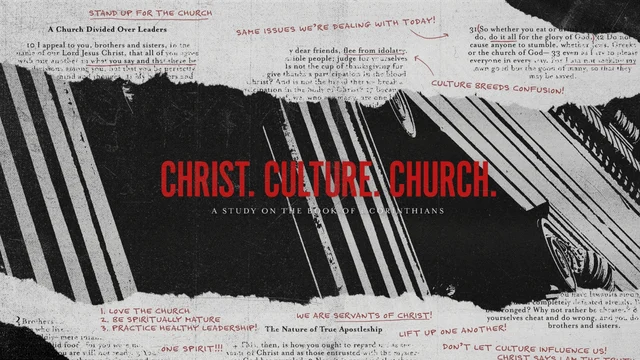
And it was. I know you got a lot of stuff, but today I want to talk about the church specifically. Go back to the beginning and talk about what it means, doubling down on church, what it means to be a part of a church, and why church is so important. Because church is hard sometimes, right? Church can be messy.
People in the church can be messy. People can be difficult. Church can be very, very difficult. Church can often misrepresent Jesus. There’s a lot of amens in here because we know it, right?
Church is tough. And that’s why this book and the Bible is all about how to come together as a church and deal with these things. Because we’re full of sinners. The church is full of people trying to understand grace, trying to grow in Jesus and all this mess and all these divisions and all these things. We don’t practice grace very good.
We don’t practice. Practice forgiveness very well. We’re not good at these things, right? But Jesus absolutely loves the church anyway. That’s what’s amazing.
And guess what, Paul, despite the messiness of the First Corinthian Church, the church of Corinth, in that time, the carnality, Paul says, I am thankful for you. I am thankful for the church. He could have easily ran out the door, but he said, no, I’m here for you. I’m thankful for you. Look.
And if you’re following along, go to First Corinthians 1, verse 4. We’re going to start there. And in your notes, the Scriptures are there. If you want to follow the Scriptures or pull out your Bibles. I love paper Bibles, so pull those Bibles out.
I don’t think I have my paper Bible. I think I left it in my bag over there today. But that’s okay. I got it electronically. That’ll work, right?
Amen. Praise God for technology. And he says, I give thanks to God always for you, because of the grace of God that was given you in Christ Jesus. I thank God for you because of the grace of God that was given in Christ Jesus. He’s talking to a people.
Let’s just review for a minute. In chapter five, he calls out somebody for sleeping with their stepmother. And six, they are taking each other to court because they’re just so nasty to each other. In 8 and 9, they are dividing over these little things like meat, bless the idols, and just really giving each other a hard time. In chapter 11, they’re mocking the Lord’s supper, they’re mocking God himself.
You know, just the presence of God, the eucharist. And in 12 and 14, they’re not using the gifts properly. And we talked about that, how they were having these tongue wars and these prophecy wars and they were being selfish and self serving. Yet Paul looks at this community of faith that has fallen way short of the vision that God had given the church, that everything that God wanted the church to be. And yet Paul says, I ain’t giving up on you.
I’m not giving up on you. You’re carnal, but they ain’t giving up on you. You do bad things, you’re not acting like Jesus, you’re acting like Corinth in the culture. But I ain’t giving up on you. I’m not running out the door, I’m not leaving you.
I’m not looking for the exit. And the big church in America, let’s just be honest, is a hot mess. It is. People aren’t loyal to their families, people aren’t loyal to their marriages, their friendships, because we’ve been conditioned to think a certain way. We’ve been conditioned to tap out when it gets rough.
When it’s not about me, I’m out. It’s all about me. And I’ve watched churches, I watched large ministries deteriorate and cease to exist because of people, because of people that gave up, that gave up on the church. And my hope is that we can make a recommitment today. I want us, as we end First Corinthians teaching to make a recommitment to the local church.
Can we do that, Make a recommitment today? Why do we want to renew our purpose and our hope in the church? Because it’s a very un American message. It is. Being a part of a church and doing what the Bible tells us that church should be is a very un American message.
Because we are all about me. But God works from, not me. But we. He works with we, not me. We are a group of people from the Old Testament.
The nation of Israel was a nation, not just one person. Remember Genesis 12 when you go back, verse one, it says, now the Lord said to Abram, go from your country and your kindred and your father’s house to the land that I will show you and I will make you a great one person. No, he says, I will make you a great individual. No, he doesn’t say that. He says, I will make you a great nation.
And I will bless you and I will make your name great. And I will bless those who bless you. And those who dishonor you, I will curse. That’s how much he meant. He believed in this people and in you.
All the families of the nation, of the earth shall be blessed. So he says, I’m going to make you great because I’m great. And through you, my name is going to be made known to the entire world. A nation. Abrahamic covenant that was placed on this nation.
And then the unfolding of that covenant through Joseph leading the. The most. Leading the most powerful nation in the world. Out of a famine, we see God working through a people. Moses leading the nation to the promised land.
David leading a nation into a powerful kingdom. And then Daniel leading a pagan king to our Savior. And we ultimately see a God, Jew, Jesus, who would come into the picture and make a way through him for all people. And then there’s a shift in the New Testament, a shift that takes place from not a nation, but to a church. A church that was started.
Today is the day, Pentecost Sunday, which we remember the launch of the church, that the baptism of the Holy Spirit fell in a room and they went out and they began to plant churches all over the place. The start of the church happened that day. Go did something different. He brought it from a people group to a church. A church full of Jews, a church full of Gentiles, a church full of different people of different races, of different kinds of personalities, different cultures.
He brought them all together, right? A collective group of people that would make his name famous. That’s who we are. A people who makes Jesus famous. Verse 2.
It says to the church of God that is in current. He didn’t say to the church of that person, Abraham. He said to the church of God that is in current, right? Because God moves and uses groups of people. Does God use me?
Absolutely. Does God use you, individual? Absolutely. But always within the context and framework of a group of people of the church, that the greatest effectiveness happens when a people come together effectively to reach people for the kingdom of God. It always works better.
Your gifts, my gifts coming together. So my first point Is it’s God’s plan A. It is God’s plan A. It’s God’s plan A. And it’s still in process.
I’ll get to that in a minute. But it’s God’s plan A. There isn’t a plan B. There isn’t a plan C. They didn’t decide, well, if the church doesn’t work out, I’ll just try something else, you know, maybe I’ll go back to Abraham again, maybe revive him or something.
Don’t know. Maybe I’ll do this or do that. No, he always planned from the very beginning to use the church. And this is hard for the American psyche. Really it is, because we’re individualistic.
There’s a Puritan named Roger Williams. Let me tell you about Roger Williams for a minute. He was a Puritan that came out of England. Obviously, the Puritan movement was a mission that came to distangle themselves from the English church or the English state church so that they could have the purest form of church there is. That’s why they came to the New World, so we could have a pure church that wasn’t ran by the state, that wasn’t ran by England, that wasn’t ran by a king.
And because of the messiness of the church, he was part of leaving the Puritan church at the time and starting another church not too far from where his church was, which we call modern day Rhode Island. So he started a church there, but that church got too messy, so he decided, I’m going to leave that church and go plant another church. And then that church got messy and then he decided he was going to plant. And he was always aiming for that perfect church, but just couldn’t get the messiness out of the church. So he just kept planting churches.
I call it the Roger Williams Cycle. And it goes like this. Read the New Testament carefully, discover the glories of the church or what the church should be, plant a new church, get discouraged, leave the church, and then start the cycle all over again. And that’s built in our psyche. Did you know that?
That’s why we have people church hopping and trying to find different churches and getting mad at somebody and moving on because of one thing one person says without ever talking to that person or ever. It’s just like, okay, it’s like a shopping cart of churches. I’m just going to go. Because somewhere out there there’s got to be a pure church, right? There’s got to be a church that I can come to.
And it’s Just okay. And then you have new Christians that come in and they’re like, wow, this is the greatest thing ever. And then after a little while they’re like, wow, this isn’t the greatest thing ever because we’re all messed up. I don’t know what to do with this. Right?
And as exciting Christians that walk into the environment are new Christians or new members or whatever it might be, it says, wow, you know, I’ve seen this over and over and over again. Church. And I’ve been in church my entire life. You see that happen. Diedrich Bonhoeffer says it like this, that the Rogers problem is this.
Those who love their dream of the Christian community more than they love the Christian community itself becomes destroyers of the Christian community, even though their personal intentions may be ever so honest, earnest and sacrificing. So Roger Williams loved the idea more than the real church. He loved the idea, the dream of there being a perfect church, but kind of overlooked the actual church. And that’s our problem. We come into these places with rose colored glasses believing that it’s going to be the most awesome church that I’ve ever been to.
And. And then after a few months, after a few years, we realized, man, there’s a lot of messiness. The American people are a hot mess. The American church is a hot mess. Things are going on.
And Tim Keller says this, he says church is a hospital for sinners, not a retirement center for the perfect. And it’s so true. It’s so true. The second thing you need to know is everything you need to flourish is in the local church. Everything that you need to prosper and flourish is in the local church.
I can’t tell you how many stories I’ve had of people whose lives are actually better. Not that they have the best jobs or everything works out for them from here on, but by virtue of being in local church, the blessings that they receive, just by a people that come together in the name of Jesus, helping each other, encouraging each other. It says it this way in verse one, chapter one, verse five, it says that in every way you were enriched in him. Bouncing on the verse seven, so that you are not lacking in any gifts. So that you are not lacking.
Because all of us don’t have the same gifts, do we? But we need those gifts to help us prosper. That word enrich is to be made wealthy. It’s to be made wealthy. I’m not talking about material wealth, which, you know, some of you that does work for, let’s just say God blesses, right?
Materially sometimes. But I’m talking about. And he’s talking about spiritual wealth, the wealth you really need. The wealth deep down. And Paul is saying God has deposited within a group of people everything to flourish in life.
And he goes on to say in speech and knowledge. He talks about speech and knowledge, specifically, those were the gifts that were fluctuating tongues and prophecy. That was kind of the main two that he was dealing with, because that’s what they were dealing with. Right? And he goes on, in the chapter 12 and 14, he talks about all the spiritual gifts and all the parts of the body that are necessary, not just those two gifts, but there’s lots of gifts that come together under those gifts.
So why church? Everything you need to flourish is found in the local church. Every gift that you need is found in the local church. Show me anyone who says, I don’t need church, and I will show you someone who isn’t flourishing. I’ll show you someone who’s missing out, who isn’t meeting the fullness and the power of what God has for them in their lives.
If they say they don’t need church, they’re missing. They’re missing something that they really need. They’re missing out on what God has for them. And Paul was serious about this. I think of people, the churches.
My father was a pastor, so we were at many different churches. But I can name person after person that influenced my life, that used their gift. They might not have been preachers, they may not have been Billy Graham’s or Craig Groeschel’s or whoever your popular pastor evangelist is, but they were simple people that had a gift to bring to the table. I remember Mr. Johnson.
Mr. Johnson, 80 years old, carrying all of us teenagers, camping, retired Navy. And then Mr. Aaron Twiggs. Mr.
Aaron Twiggs was a retired Marine. So there’s a lot of arguments there, you know, when we were together about who was better. They would trade off war stories with each other, and they were the funniest men in the world. But they spent their time in retirement to pour into young people like me and a bunch of other boys camping with us, hanging out with us. Ms.
Lancaster, a Sunday school teacher, that would pour into us when we were very young, tell us the Bible stories and answer the questions for us when we were little kids. Because, you know, young kids have all kinds of questions, right? There’s 20 or 30 or 40. That’s why I love our children’s ministry. They’re back there with all kinds of questions, and we’re prepared to answer Them in the best way we know how.
Amen. Mikayla’s like, I try. I try to do it best I can. Amen. We love children.
I think of. I call them the B2 team. Bizzle and Bridges. They were both named Jerry. Jerry Bizzle and Jerry Bridges, who poured into our youth when me and my sisters were in our teen, informative teen years, how they would use all their time, our extra time, take time off of work, take us on trips, take us to the Outer Banks, take us to different places, you know, conferences.
Those guys were already up in age. They didn’t have a lot of energy, but they poured in. I think of people like that who poured into my life. I think of Freddie and Helen Pierce, who actually supported me so I could go to seminary, helped me financially, people who loved me and supported my ministry and helped me. All these gifts, these gifts of giving and these gifts that were brought into the church, these people were great people.
They didn’t look maybe like much. You wouldn’t have known them passing them on the road or wherever you’re going, you wouldn’t have recognized them. But they were great people because they poured ministry. They poured into the people around them. We all need each other.
I can’t even tell you the number of people before I came into ministry at the altar, gathered with. There were 30 or 40 people gathered around me of all different walks of life, praying, laying hands on me, praying for me in ministry and sending me off. We need these people. Need these people. So how do we double down on church?
Look at verse two. It says, to the church of God that is in current, to those sanctified in Christ Jesus. What does sanctification means? It means to be set apart. Many of you already know that.
Taking something out of something, taking something and cleaning it up a little bit, right? Getting all that stuff out and putting them to the side. He’s what he’s done with us. He’s taking us a collective and he takes us out and puts us aside as a holy people, a holy separated people. I think of it like a china closet.
My mom has a china closet. And she’s always had. I think she has multiple china sets because she just collects. Yeah, she has many. So many.
But we never use those china sets. We don’t understand why we don’t use those china sets except on very, very special occasions, right? So she goes among the dishes. Of all the dishes that she has, she has these china sets. And they’re used for different occasions.
Some Christmas, some Easter, some, you know, when you have Special guests to the house or whatever that is. But they’re special. That’s what God does with us. He’s taken us special China and put us to the side. And he’s going to use us for something special.
For a mission, for a purpose. He’s called the Church. He’s taken a collective of people and set them apart and made them something to complete the mission of God. We are a special people. But what Paul’s saying is you’re not acting like a special people.
You’re not living like a special people. You’re acting common because you’re uncommon. You’re holy. You’re set apart. Your decisions and the way you think that you’re better than everybody else.
But here’s the deal. It wasn’t their morality that set them apart. It wasn’t that they thought they thought were better than anybody else that set them apart. Right? It was Christ that set them apart.
Christ sets us apart. And we are sanctified in three ways. First, our past. Justification. Justification.
We are justified in Christ. So the moment you give your life to Jesus, you have been justified by the blood of the Lamb, you have been sanctified and set apart. But there is also a future glorification. That’s in Ephesians. You can learn that in Ephesians 5, that you are set in the future.
You’re going to be glorified. You’re going to be made perfect. You’re going to made right. Practically. Not only spiritually, but practically at this point.
You’re made spiritually, but you’re going to be made practically one day. But where are we right now in sanctification? We’re in the messy middle. We’re in the messy middle, aiming for the future. We know that we’ve been justified.
And the process in which I am becoming like Christ, what God has already declared me to be sanctified in, I am working out. That’s why he says, work out your salvation with fear and trembling. We will never reach the state of perfection in this life on this side of glory, because we are all in process. So we’ve been set apart, we’ve been made holy, but we are in process. Process.
We are God’s plan A in process. Right? We are in God’s plan A, in process. And of course someone will offend us, right? From time to time somebody’s going to say something to hurt us.
We’re not going to agree with something, but we’re all in process. Why? Because we are sinners. We are all sinners. And what does that require patience.
It requires patience. As Paul was patient with the current church. We are to be patient with others, allow people to process. The church is a hospital for sinners, not a retirement home for the perfect. We need to be patient with people.
Which brings me to my first point. What do we need to do? We need to be patient. Practice patience. When we practice patience, we are practicing doubling down on church.
We believe in the church when we practice patience with people. But I don’t have patience. I know I don’t have patience. In fact, just this morning I was reminded I don’t have patience. Elder Alex Rubio had to pull me in the back room and say, patience, son.
Be patient. So we need to practice patience with people. They’re practicing patience with us. We’re all in process. And number two, we need to extend grace.
When we extend grace, we double down on church. We don’t give up on the church. Amen. We practice grace. Look at verse four.
I give thanks to my God always for you because of the what grace of God that was given you in Christ Jesus? Because of the grace of God. And I’m able to give grace only when I understand grace, that I need grace. I need grace every day. You can’t give grace until you really understand grace.
Because we’ve been taught that grace isn’t something we give out as Americans. You know, you do me wrong and I’m doing, you’re out, right? You messed me up. You’ve messed up my life, you’ve messed up my plans. You don’t get any grace.
You hurt me, you offended me. No grace. And then you look at Jesus. Wait a minute. I died for you and I was perfect.
We got to remember grace. There’s a psychological term called fundamental attribution error. Many of you probably know this term, and a lot of us operate in this. Because when I misbehave, when I. When I.
Let’s just say I’m late for something, you know, there’s always a reason, right? Oh, you know, I’ve got a lot going on. I got my kids, I’ve got things here, I got things there. And I give myself grace because of circumstances, because of circumstances in my life. It makes sense that I should put grace on myself.
But when somebody else shows up late, they’re lazy, right? You know? You know, and that’s how we operate. It’s called fundamental attribution Era. We do that.
And I think of it this way. Short term story grace versus full story grace. Short story grace is when someone says, well, God has saved Me and understands that God has rescued me and God has justified me and I’m good to go. But long term grace or full story grace is I understand what God has saved me from in order for me to do, in order for me to move forward into the future, what he’s placed on my life. Philip Yancey says it like this.
The three most powerful phrases in the English language are I love you, I forgive you, and what’s for dinner, right? What’s for dinner? Let’s just move on, right? I forgive you and let’s go have coffee, let’s go hang out. And many don’t get there, right?
We get mad and we don’t practice grace. We don’t forgive, and we never see them again in our entire lives. Some ups in some relationships, right? We’re canceling people we live in cancel culture. I’m not gonna.
We gossip about them. Instead we talk. Can you believe what that person did to me? I just. I have every reason not to ever talk to them again.
I’m tapping out and I’m doubling. You know, I’m gone. I’m gone. Church is just. I can’t do church anymore.
And I’ve been there. People are like that, you know, because it’s a hospital for the sick and sinner. And that’s. We’re all in process. One scholar said that the early church averaged about 30 people.
And we’ll close here in a second, okay? Yeah. Y’ all are like, wow, Leon, you’re not too wordy today. Yeah, amen. It’s Pentecostal.
Amen. Charlie says it’s Pentecostal when you go long. So just keep going. One scholar said that the early church had an average of about 30 people in their church. Okay.
It comprised of an owner that was a wealthy person who was able to give their place and offer meals and bring the church together. Then you had servants, you had family members, and then you have tenants that came in and were a part of that church as well. You had single ladies who were former prostitutes because there’s a lot of prostitution in that day. And you had homeless people and you had Jews who had come to Christ who came with a very, very moral background. So as you can see, on one hand, we think, wow, what rich diversity.
That’s what we want in church. But could you think of the division that that probably caused in those meetings? There were some messy churches back then that they were, you know, and we’re thinking we’re messy today. They had all kinds of people coming together. And as Paul was Writing this letter to these group of people, I can imagine how discouraged he was as he was trying to teach them and show them and his aggravate.
I’m sure he’s like God, I just want to tap out, I’m just done, right? But he realizes that this is not his work. This is God’s work. This is the work of God to bring people together. This is the work of God to help heal and everybody bring their giftings together by the power of the Spirit which is working in every individual in the church.
It’s God’s work, it’s not our work. He will sustain until he began this work is what Paul was thinking. And yet I think that it’s over. But God will not stop. He will complete his good work.
He will sustain us. He finishes what he started church. He started this church and he will finish it. This is his church. This is not Leon’s church.
It’s not any other leaders church. This is his church. And he will sustain you and he is faithful. Look at verse eight, he says, who will sustain you to the end, guiltless in the day of our Lord Jesus Christ. God is faithful.
Faith sustains us. In closing, I want to share a story. World War II, story of a man named Elgin Staples. Elgin Staples was on a ship, the ship Astoria. They went to battle, took some severe hits.
He was shot in both legs, thrust out into the sea. He was in the sea for hours before he was saved. He had this life belt on him. And as he was sitting out in the sea, he just was mesmerized with this belt. He looked down to the belt, he saw the numbers on the belt and he memorized them.
If you’re out in the sea for four hours, you’re probably going to be looking at something like that too, right? To try to keep you from going insane. And he was looking at his belt. Well, eventually he was saved. He went back to his hometown in Akron, Ohio and he was sitting with his mother.
And what he didn’t realize in their conversations, that his mother actually worked at the plant, the Firestone plant that actually developed those life vests. And while they were talking, he started this number on the vest. He says, there’s these numbers. What are they all about? I don’t get it.
They’re right in front of you, right there. They’re on every vest. I saw that on every belt. And she said, oh, that’s the person that develops it and inspects it as a way of accountability so that they make sure that those things stay safe. And she Thought, well, you know, what was the number on that belt, by the way?
He said, oh, I remembered the number. And he spat the number out really quick because you know, when you’ve been out four hours, you know you’re going to do something and you memorize that number because he just never forgot that number. That was her belt. She developed that belt. She inspected that belt.
And is it interesting, the one that brought him into the world actually sustained him. Him in a place that could have brought death. It saved his life. Sustained. We have been sustained.
We are sustained by Jesus, the one who created us. The God who created us, who brought us together, sustains us. Sustains us as a church. And I know that many of us have come through strife in our personal lives. I’m sure all the stuff in America, all the hostility right now, all the back and forth, all the politics, all the hate.
And I know that our church even has gone through a lot in recent months. We have. If you’re new with us, I don’t want to bore you with the story, but we’ve been through a lot. Amen. Can everybody say amen?
Hallelujah. We’ve been through a lot with this move. And a lot of changes have taken place. A lot of people have come and gone, but our God sustains us. He’s put a serial number on our church, and what he’s began, he will complete.
And God’s getting ready to do something amazing in this church. But we gotta lean in and trust in the Lord and realize that we’re a hot mess and we make mistakes, but we can grow this church together. We can grow this community. We can reach this city together. Amen.
There was only 100 people in a room right in the day of Pentecost. We got them right here. Amen. And it changed the entire world. Because our God has a purpose, a plan, a serial number on our life.
And he will sustain us to the very end. He who began a good work will complete that good work till the day of Jesus. Will you believe that with me? Will you receive that with me? Hallelujah.
Get ready.