Listen to this messageDownload MP3
Keeps playing while you browse the site.
Read the transcript
Hello, and welcome to the Salt Church Podcast. Thank you for tuning in to this week's message. Join us as we explore God's Word providing practical teaching for day-to-day living. The message you are about to hear was recorded live at our Sunday morning worship experience. If you would like to learn more about Salt Church, please visit us at saltchurch.
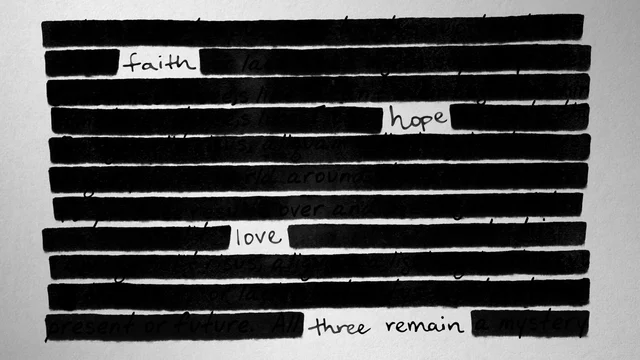
org. We hope that you are encouraged by today's message. We are in a series or actually finishing up a series called Three Remain. And we went through faith, hope, and today we're going to talk about love. And here's what I want to say about love.
There's about God's love particularly. And there's no possible way with the combination of the 26 letters in the English alphabet that will explain the way God loves you. There's no way we can put in the words, there's no way. In fact, I would do injustice to even try to put some kind of rational explanation to how God feels about you. Because He loves us with a love that is inexplainable.
And the fact that no matter where we are, no matter where we've come from, no matter who we are, no matter where the road has taken us or where the road will take us in the future, there's just really no way to wrap our minds around the fact that God pursues us when we were yet sinners, when we were yet far from Him. He loved us so much that He actually gave His Son. It's just hard for me to even put those in words. But I'm going to try to do my best today, and I love how Paul prayed, for this reason I kneel before the Father and I pray that you, being rooted and established in love, may have power together with all the Lord's holy people to grasp, to grasp how wide and long and high and deep is the love of Christ. And to know this love that surpasses knowledge, that surpasses the left brain, that we can't even put into an explanation, that you may be filled to the measure of the fullness of God.
That we can't even do that. So that's my prayer for myself today, to kind of help guide us into what that really means. And that's my prayer for you, that your hearts would be open to understanding, in a miraculous way even, of the love that God has for His people. So we are in this series, Three Remains. So I talked about faith in the first week.
I talked about hope last week, fighting for hope. And this week, I want to hit love. But I do want to give you a little staple for next week, because next week I'm going to start a new series. And I've never preached on this, or taught on this before. But it's going to be called One Minute After You Die.
And we're going to deal with heaven, hell, and the afterlife, and what it really means for us today. And I'm excited about that, because I get to talk about that. And it kind of leads to God's love. So it's important for us to get a kind of a foundation of God's love, and what it really means, so that we can kind of dive into that. So I'd love for you to be here next week as we really talk about eternity.
We talk about what heaven really is, what hell really is, what eternity really is, what we can expect when we leave this earth one minute after you die. But today, I'm going to hit on love. And there's only two subjects in the Bible that God felt were so important that He wanted to donate an entire chapter to. One of them was faith in Hebrews 11, by faith, by faith, by faith, by faith. And I talked a little bit about that in week one, by faith.
And then there's love. First Corinthians 13 talks about love. And we've hit on this throughout the week. We had kind of the theme scripture, and now these three remain, faith, hope, and love. And the greatest of these is love.
But I want us to go back to that entire chapter. And if you have your Bibles, you can turn there, 1 Corinthians 13, 1 through 13. Or if you want to keep your eyes on the screen or go to your note page, we kind of spoil you a little bit. So you've got plenty of opportunities to look at scripture and follow along with me. And you can take notes as well.
But it says this, and I love how this kind of goes on and on. If I speak in the tongues of men or of angels but do not have love, I am only a resounding gong and a clanging cymbal. If I have the faith of prophecy or the gift of prophecy and can fathom all mysteries and all knowledge, and if I have the faith that can move mountains but I do not have love, I am, what, nothing. If I give all I possess to the poor and give it all away and give over my body to hardship that I may boast but I do not have love, I gain nothing. Love is patient.
Love is kind. It does not envy. It does not boast. It does not, it's not proud. It doesn't dishonor others.
It does not self, it's not self-seeking. It's not easily angered. It keeps no record of wrong. Love does not delight in evil but rejoices in truth. It always protects, always trusts, always hopes, always perseveres.
Look at all those powerful words there, right? Love, and here's the key, if you'll underline this, if you'll take note of this, love never fails. This kind of love that we're talking about today, this love I can't even explain, I can't even fathom. This love never fails. But where there is prophecies, they will cease.
Where there is tongues, they will be still. Where there is knowledge, it will pass away. When the Lord returns and makes everything right and makes everything new, there is, you know, these things will no longer be needed. But what remains? What remains?
What remains? And this is where our series has taken us the last three weeks. And now these three remain. Faith, hope, and love. But the greatest of these is love.
So how can I even best define what love is and what that really means to us? Because this scripture is kind of speaking to us. It's a scripture to the church of Corinth. He's speaking to these people and sharing this idea of what love really means. Because apparently there was a lot of...
There's a lot of bragging, there's a lot of boasting about gifts and what God was doing in the church, but there wasn't really love involved in it, and he's trying to pull them back to what real love is. And the only explanation, or the best explanation I can give to God's love is unconditional forgiveness. Unconditional forgiveness, you can write that down, I didn't really put that in your notes, but unconditional forgiveness. Because, man, if we can unconditionally forgive, like God unconditionally forgive, what kind of world would this be? What kind of life would this be?
What kind of church, what kind of family, what kind of churches, the general broad church? I love famous quotes. I like looking up old quotes, old baseball quotes and things like that, you know. So I go back to scripture, I mean, not scripture, but in time, in history, and there's a lot of famous quotes that we use today. Here's one, it's better to have loved and lost than to have never loved at all.
Alfred Tennyson, a lot of you probably have used that quote before. How about knowledge is power? Knowledge is power. Francis Bacon, right? We got those all over, plastered all over our schools, right?
How about this one? To err is human, to forgive is divine. Yeah, Alexander Pope. And some of you thought this one was in the Bible, but it's actually not. It was a quote by Benjamin Franklin.
It says, God helps those who help themselves, right? A lot of you said, probably use those as scripture, right? God helps those who help themselves. But there's a quote, and a lot, just to give you upfront knowledge here, a lot of this comes from Jensen Franklin's book, a new book that he wrote, and I borrowed a lot of ideas from this. But there's a quote that a man made, and it goes like this.
It goes like this. If I could find my place here. It says, you gotta, you gotta, you gotta, you love even, love like you, and you've never been hurt, sorry. Love like you've never been hurt, is the quote. Love like you've never been hurt.
This quote came from a man, an African American pitcher in the American League. His name was Leroy Satchel Paige. He was inducted into the Hall of Fame in 1982. He played major league ball for close to 20 years, and he played all professional ball for almost 40 years. So he started in an African American league and moved into, and this was in the time of segregation.
And the amazing thing about Paige is he played baseball in a time where, where, you know, there was a lot of segregation and there was a lot of racism. And people would stand in the crowds as he was going out and he was pitching, and he was probably one of the best pitchers in the league, but people would yell at him and call him names and make derogatory statements towards him. And one story that was verified is that just to intimidate them, a team lined up all their best batters, all four of their best batters, because they really wanted, they wanted to just intimidate him. And he looks back at his crew and he tells his first, second, third baseman, sit on the bases. And then he tells the crew in the outfield to go to their dugout.
I'm getting ready to strike every one of these guys out. And he did. He struck them all out. He struck them. And normally, you know, you line up all three of your batters, and then you, you know, you're not so best three batters, and then you knock out the fourth, and then you send them all home, and they were trying to do that, and he struck them all out.
And then he would often play two games a day. That's crazy, you know. He invented many styles of pitching. B-ball, another style was bat-dodger, long tom. But his most famous pitch was once called the hesitation pitch.
He had this weird pitch in which he would hesitate for a second. It was really awkward, it was a weird stance, and he would throw the batter out almost every time he used that pitch, because it would fool him, it would delay him. It says he pitched three innings when he was 60 years old for Kansas City. And he had many, many famous quotes. He said, if you want to be a good pitcher, keep the ball off the fat part of the bat.
He said, work like you don't need the money, dance like nobody's watching. Right? Yeah. And it probably borrowed quote, but he was known for saying that. And then there was this phrase right here that really gets it down to the matter.
You've got to love like you've never been hurt. You've got to love like you've never been hurt. That's a powerful kind of love. Because everyone is going to get hurt. We're all going to have rejection happen to us.
You're going to be let down. You're going to have somebody talk about you. You're going to have conflict in your life. I mean, it's just a fact. I like how Mark Twain said it.
If you find a dog on the side of the road that hurts, that's starving, that's mangled, that's dirty, that's dying, and you feed that dog, take it home and groom it and nurture it back to health. The dog will never bite you. Therein lies the major difference between human beings and dogs. Isn't it true that we can be very hostile to each other and it's just going to happen? And many times people you've loved the most have hurt you deeply, I'm sure, in your life.
The people that are closest to us often hurt us. In Matthew 17, it says, offense will come. Jesus said it himself. He said, offense will come to you. But what do you do?
Well, you've got to love like you've never been hurt. You've got to love the way God loves you. You've got to love like you never. And maybe even with the people you're working with right now, the people you're around right now, maybe they're driving you to the very bitter end. You don't know what to do.
You don't know what to say sometimes. What do you do? You whack up and you say, you know what? I'm not hurt. I'm going to love like I've never been hurt.
I'm going to look past the hurt and I'm going to love them anyway. The best thing you can do in return is love like you've never been hurt. Think about Joseph in the Old Testament. He was thrown in a pit by his brothers. He had a dream of authority, of position, of provision.
And God was going to do some big things in his life. And his brothers in the process threw him in a pit. That Potiphar's wife falsely accused him. But he said, The cupbearer forgot about him. And when his family was starving and they came to him in Egypt and he saw his brothers, he could have done anything.
He could have saw what his brothers had done. They threw me in the pit. They cast me away. They faked my death so that my father would not know that they got rid of me, that they sold me into slavery. He could have said, I can have my revenge.
I can have it right now. But what did he do? What did he do? He decided that he would love them. Like he had never been hurt.
He loved them. He returned it in love. Moses failed miserably when trying to set his people free. And his people didn't even believe in him. He wandered 40 years in the wilderness thinking about that moment.
But when he came back, when God called him back, what did he do? He had to put in the back of his mind, you know, these people may not respect me. They may not believe in me. But you know what? I'm going to love them like I've never been hurt.
David had a father who didn't believe in him. Our brothers who belittled him. He had a wife who put him down and mocked him. His worship. He had a son named Absalom that broke his heart.
He had a father-in-law who tried to kill him. And you thought your family was crazy. He had all these things happening to him. But what his thought wasn't, I'm not going to be bitter. I'm not going to be mean.
I'm not going to be angry. I don't care what they do to me. I'm not going to be angry. Job talked a little bit about him last week. He lost 10 children.
His wife told him to kill himself. He had four friends that sat around him for seven days accusing him, calling him a hypocrite. Calling him under the judgment of God that he said that he had done wrong. them. What did Job do?
The Bible says he prayed for them. He prayed for his friends, and he made up his mind, I'm not going to, I'm going to love them, because I'm going to love them like I've never been hurt. If we let God fight our battles, it's really cool what he'll do. He'll bless us, and he blessed Job double in the end, because he decided to love even when he was hurt, even when he was defeated, even when he was rejected by the people who were most close to him. You got to love God.
You got to love people. You got to love like you've never been hurt. Jesus was afflicted. He was beaten. He was wounded, which was an external hurt, but he was bruised, and he was internally hurt, because his very people, the people he came for, hurt him, and he was hanging on the cross, and he looked down, and what did he say?
Father, forgive them. Forgive them. Forgive them. Unconditional forgiveness. God's love for people.
Love them like he had never been hurt. Those nails, the stripe, the pain on his body. I'm going to love these people like they've never been hurt, and in Christian homes, and I want to kind of hit on this for a second. In Christian homes, families are a mess. Situations are a mess, and we just don't know.
We don't know how to love each other. I can't tell you that how many stories of parents who are estranged from their own children because of something in the past that happened. I'm not going to talk to them anymore. I'm not going to spend time with them anymore, and the grandparents haven't seen their grandchildren for years because of the reconciliation hasn't taken place. There's unforgiveness in families.
Brothers taking brothers to court, and many don't know how to keep their family together, but you know what Paul says? Paul says we have a ministry of reconciliation, that we are people who reconcile. In Romans 5, it says, when you were estranged from God, you had no righteous compass, but God, rich in his mercy, the one who knows the truth about you, took the first step, and every other step to reconcile you back is now saying he wants to reconcile you, and we hold on to that love because love never fails. What more can we do but to look to God's love and reflect God's love? And there's power in words, in reconciliation.
I heard it said our words are like nitroglycerin. They can either blow you up or they can heal your heart. Some people, they just wake up in the morning, brush your teeth, and sharpen their tongues, and you got to go out there knowing that there are people like that, but we got to love like we've never been hurt. We got to respond with love, respond in our families, respond where we work, respond in our relationships, heal those broken relationships. Let's be people of the Lord that know the love of God, that unconditional forgiveness and able to return it.
And here's the thing, how many times do you forgive? I love how Peter, I just, you know, Peter's my favorite in the Bible. I mean, he would curse you out one minute and then praise the Lord the next, you know. He'd be preaching and then he'd be cursing over in the corner. I mean, he just had so many extreme emotions and some of you can relate to that, right?
Just all the ups and downs and the things and the frustrations. And Peter, you know, he asked Jesus a question. He said, you know, how many times do I forgive? Because, you know, the Pharisees, they say you forgive three times. That was kind of the rule.
After three times, you know, no forgiveness is allowed anymore, you know. That's the cap three times. Peter says, okay, I'm going to do that times two plus one. Let's make that seven. Jesus, I'm a really good, I forgive people really well, God.
I do it really well. I'll do it seven times, you know, seven times. What do you think? So he says, how many times do I forgive my brother and sister? Up to seven times?
And Jesus answered, I tell you, not seven times, but 70 times seven. What does that mean? It means 490 times a day. It means it doesn't stop. How many times do we forgive?
So the point that he was making here was, love is not about keeping score. And that's my first point. Love is not about keeping score. It's about losing count. Now, I had a great physical example today to show you, but I could not find a glass char of Heinz 57 ketchup, okay?
Do you realize that you have to actually order those things online? They don't put them in the store anymore? And how many of you like ketchup in here? Are you a condiment person? I mean, it's, it's fall kickoff today and we're going to eat some condiments after this, you know?
So, so, uh, uh, man, condiments are good and ketchup. Ketchup is great. Ketchup's like the American condiment, right? I put it on french fries. Some people put it on steaks.
I won't go that far, okay? I like my steak. I like the flavor of my steak. But some of you guys, I had a best friend that would drown his steak in ketchup. And I'm like, gosh, you're killing the flavor of the meat, man.
Come on, just get the real flavor out of it. But we love it. But the Heinz ketchup, let me get a swig of water here. Okay. So here's my example of what never losing count means.
You take a squeeze bottle and take a Heinz ketchup glass original bottle, man, the best kind of ketchup you can get. And if you go on their website, or used to go on their website, I'm not sure if it's still there, but there's a little 57 ring at the top. Of the bottle. Because what happens when you turn that bottle? It's not going to come out right away, is it?
I mean, because it's under pressure. It's kind of like us. We're under pressure, right? We got a lot of pressure and we don't want to let out. We don't want to let what we have in there out, right?
But first of all, you got to make the decision to pull the cap off. And that cap's really hard to take off sometimes, right? Especially those glass bottles. You pull that cap off. And then if you tap, if you tap that little 57, what happens?
Just keep tapping. A little bit starts coming out. A little bit starts coming out. A little more starts coming out. You just keep tapping.
You don't stop at one little tap, do you? You keep tapping. That's the same thing with forgiveness. That's the way forgiveness works. You keep tapping.
It's hard to open up that bottle. It's hard to let it out, you know, at first. But you pull that cap off, you got to make the first step and say, I'm going to pull my cap off. I'm going to make the first approach in this reconciliation process. I'm going to walk forward in this process.
And then I'm going to tap. I'm going to continue to tap. I'm going to continue to love. I'm going to continue to do. What do you do in that process?
Well, you continue to do things for that person, even when they treat you wrong. Maybe I'm going to send them a note. I'm going to buy them maybe a gift. Maybe I'll just send them a little text and tell them I appreciate them. I love them today.
I'm thinking about them today. You just keep tapping. You keep tapping. And sometimes you're not going to feel like tapping, right? You're going to get aggravated because that ketchup isn't coming out, right?
And it's not happening. But you keep tapping. And you keep tapping. And you keep...and eventually...
and on the other side, you have the squeeze bottle. Most people want the squeeze bottle. Let's just gush it out because that's the kind of culture we are. We're the squeeze bottle culture. Let's just squeeze it.
Let's get it all...you know, it should come out easy and it's smooth and gooey and all that kind of stuff, you know? We want that gushy, gooey type of stuff. But that's not how unconditional forgiveness works. That's not even how the love of God really works.
Sometimes it's pursuing even when you're not feeling it. And love is not keeping score. It's about losing count. It's about losing count. I'm going to forgive them and I'm going to forgive them again and I'm going to forgive them again.
I'm going to tap. I'm going to tap on that little 57 over and over and over again. Because forgiveness is not about keeping score. It's about losing count. Secondly, sometimes the worst done to you brings out the best in you.
It's another point I want to make about this forgiveness process. If we're going to be people who love like God loves or are just a slight reflection of this unconditional love that God has, we've got to realize when things bad happen to us between another person, then perhaps it's meant so that the best can come out of us. So how we respond is important. He redeems your unforgiveness, your anger, your hurt, your pain. And it's good for you because it develops character.
We talked about that last week, didn't we? It develops character. When you're going through pain, when you're going through suffering, when you're going through disagreements, when you're going through friction, there's suffering in a sense that takes place, but it brings out character. It ultimately can change your life and change your future. Did you know that?
Romans 8, 28 says, and we like to use this scripture all the time to help people soothe, but through pain and difficulty. And it says, and we know that God causes everything to work together for the good of those who love God and are called according to His purpose. But what does that really, really mean, played out? Can He really redeem the things in our lives to bring out a better situation? Jensen Franklin, in his book, talks about a situation that happened to him.
And he kind of opens up the veil of being a pastor of a very large church, a very well-known ministry, a television ministry. And his daughter went wayward in college, drugs and alcohol, the whole nine yards. And they were a perfect family, he would say. We were a perfect family. We were the ministry family.
We were the Christian family. Everything was going well. She went off to school, and she started to slide into alcohol, into drugs, and into addictions. And one day, even before going up to speak, he said that his wife just showed up on the side of the stage and says, we're going to go get our daughter. We've got to go get her.
It's got to happen. So he had to hand over his pulpit just literally 15 minutes before he stepped out. And they went up to school, brought her home because she was just in such a mess, and things were happening. And they bring her home, and they try to talk to her. They try to do things for her, but she runs away, and they don't see her for days.
In fact, a couple of weeks. And then she responds in a text and says, she's gotten married, and she's married the very man that her father despised, the one that he wanted her to have nothing to do with, that led her into this lifestyle. He said, I despised him, I resented him, he was just angry, and he wanted revenge. You know how the daddy thing happens, you know, that's your daughter. And he just wanted to fight, and he wanted to do whatever he could.
But he realized, and God began to speak to him, and the heart of God came out in that process. And he says, you know what, I've been hurt. And I've been done a lot of things through this particular situation. But I'm going to love them. I'm going to choose to love them regardless.
So he begins to bite them over. He begins to tap on the ketchup bottle. He invites them over and has dinner with them and starts seeding little things in their lives, you know, just showing his love and showing his appreciation for them and just sharing with them and going to the movies and going out to dinner, and then it led to other things. And eventually, through a period of time, through that process, through a period of time, through a period of time, through a period of time, through a period of time, through a period of time, through a period of time, through a period of time, through a period of time, Yeah. Reconciliation began to take place.
And today, he will tell you, God will use the tough things in your life to bring out the best in you, and it can change your future. Today, his daughter and his son-in-law, who he despised, is in full-time ministry. Amen. They're one of the largest churches in Atlanta because he chose to forgive. Even when he felt angry, even when he felt frustrated, even when he wanted nothing to do, he chose to love because he decided, I'm going to love like I've never been hurt.
I'm going to love like I've never been hurt. See, it's like a mathematical formula. It's a kingdom formula. It doesn't make sense in rationality, you know, and it seems, it just seems out of sorts in some ways, right? But in kingdom calculus, or kingdom calculation, it's so much different.
When we love, even when we're supposed to despise, good things come. It equals positive things. It equals double blessings like it did with Job. It equals things that we just don't make sense in a normal life situation. And that's what God has for us.
Forgiveness is not about keeping score. It's about losing count. And sometimes it takes the worst things done to you to bring out the best in you. And thirdly, and this is a hard one, but we can't deny it. It's unforgivable not to forgive.
It's unforgivable not to forgive. In fact, Matthew 6, 14, and 15, Jesus says, if you don't forgive those who have done you wrong, your heavenly father won't forgive you. And we like to skip right over that one, don't we? But we got to be real. Forgiveness is a choice.
Forgiveness is a two-way, reconciliation is a two-way street, but forgiveness is a one-man game. It's our decision. It's our choice to take the next step. We can forgive. And if you'll open up and start tapping, God will begin to do things.
When you do what's right, I love this, when you do what's right, you can be at peace with the fact that everybody's not at peace with you. You can walk through life with that comfort, knowing that you're right with God. Do what's right and let God deal with the rest. Do what you're supposed to. Follow what you're supposed to do.
Listen to God. Tap away at the bottle and just let God do what He's doing. Let Him work. Because love never fails. I mean, someone might have a daughter right now or a son that's wayward.
What do you do? And maybe you've made some bad decisions. Maybe it's time to step out. Maybe you've had a daughter who had a child out of wedlock and because you disagreed with it and you didn't support her decisions and he made some bad decisions, you've completely cut yourself off from that person. And you say, we're not going to do it anymore.
Now, there's times where you have to cut people off if they're in similar situations, but you can still tap at that bottle. You can still tell them that you love them. You can still reach out to them. You can still, you know, show them just seeding, seeding things in their lives because love never fails. Love never fails.
And fourthly, and lastly, I want to say, you can't forgive unless you know you are forgiven. You can't forgive unless you know you are forgiven. You can't be loved unless you really know what love is. Romans 5, 8 says, God demonstrated his love for us and this, while we were still sinners, Jesus died for us. Jesus died for us.
I've shared this story a few times, but I'm just going to give you a paraphrase of it. And I think it's just such a powerful story of forgiveness. The story of Joyce Meyer, who, prolific author, Christian author, many books about, you know, Christian ministry, restoration, reconciliation, controlling the mind, battlefield of the mind, sold more copies. And she shares the story about her childhood and how her father was sexually abusing her since she was a young age. And she, numerous, numerous, numerous times, she could count every single time.
She could remember every graphic detail of everything her father did to her. And it led her into a deep depression. And by God's grace, she, and God, God saved her and rescued her out of that. And, you know, her story is what it is today. But the biggest thing that really got me about her story is that many, many years later, after God used her and she had a successful ministry and did some big things, she decided that she was going to love like she had never been hurt.
So what she does is she reaches out to her father. She reaches out to her father. It was something that God just spoke to her heart, said, you better, you need to do this. You need to do this. And she says, and what she does, she didn't, she knew she wasn't going to receive any kind of reconciliation wasn't going to take place.
She already knew that. She knew how he was going to respond. But she decided that she was going to bless her mother and father with a new home. So she blessed them with a new home and she took care of them and set them up and got them in a comfortable situation. She just began to bless them in so many different ways.
And just to pour her love on them, just tapping that ketchup bottle, just tapping it. Just let me take care of your living situation because they were getting older, her parents were getting older. She was just going to love them. She could still, she said the hurt was still there, but she decided that she was going to do this. And then came that day when her father in tears basically fell down in front of her and said, I'm so sorry for what I did.
And right then and there, she got down and she said, I forgive you. But more importantly, I want you to have a relationship with Jesus. Because what I went through wasn't just some bad stuff. There was a purpose in all of that. The pain and the hurt and the darkness that I went through, there was a result at the end.
She shared the story of bringing her father to Jesus, and he gave his life to Jesus. And then not long after that, she baptized him. And then a few months later, he went to be with the Lord. And somebody asked her, says, you know, if you had to go through all of that again, would you? She said, in a heartbeat.
Because there was purpose in the pain. There was purpose in the friction. Through those seasons, I learned what the love of God was really about. Gorking through the pain, I learned the unconditional forgiveness, the love of God that he gives us. This one thing remains, and it is love.
And I loved him regardless. And I would do it all again. Perhaps there's people here today that maybe you're in pain. Maybe you're in a relationship that needs to be reconciled. Maybe there's a lot of unforgiveness.
Maybe you have some broken family. I know I do. In my distant family, there's some things there. And there's brothers and sisters that aren't talking. And there's a lot of, even in a pastor's life, in my family, I see it happening.
But you know what I can choose to do? I can choose to love them. You can choose to love them. But you can't know the love of God. You can't even begin to understand.
You can't even put it into normal language until you've experienced it yourself. Because God loves you so much. Though you have fallen from him, though you have gone wayward, though you've gone down your own path, guess what? He's here, ready for you. He loves you.
He's quite fond of you. He thinks about you all the time. He's been petitioning for you even before you woke up this morning. Did you know that? Jesus was petitioning for you in heaven.
The Bible says he petitions the Father on our behalf. Did you know that? So let's pray. If you would bow your heads and close your eyes just for a second. And I just want some peace and quietness through the house today.
As the Spirit of God works in the place that Jesus just changed the atmosphere right now. We're asking you to come in, Lord, and have your way here today. There's some people here today, God, that need a touch from you. They need to experience the forgiveness of you, Lord. I pray in Jesus' name that you would begin to change hearts and change lives right now.
God, there's a mother and a daughter or a mother and a son that's going through some difficult things right now. They haven't spoke to each other much. God, I pray that you would begin to mend that relationship, God. God, there's a co-worker, there's a partnership, just things aren't good, the environment's not good. God, I pray that you would begin to stir the heart of the individual here today that's going through that to love, unconditional forgiveness.
I pray for that marriage, Lord, that's just going through the rocky times and they haven't really, the reconciliation just isn't there yet. I pray for that, but that on the behalf of the husband or behalf of the wife, you'll begin to start moving them towards loving them anyway. Tapping the bottle of forgiveness. Tapping it away. Forgive.
Forgive again. Love like you've never been hurt. And lastly, Lord, there are those here, God, that may have never experienced this unconditional love that I talk about. And while all heads bowed and all eyes closed in the house, is there one here that you're like, Pastor, it's time. Pastor, I've been walking away from God for so long, and I have so much unforgiveness in me, but I want to know the forgiveness of a Savior.
I want to know the love of a Savior. I want to know that He loves me. You can experience that today. Is that you? I want to pray for you, if you could just lift your hand and say, Pastor, I'm ready.
I'm not going to embarrass you. I'm not going to call you to the front. I just want you to just gently lift your hand. Any others? Any others?
Hallelujah. If you would just pray this with me, all the church together. Father, in the name of Jesus, thank you for your unconditional love for me. Thank you that you gave yourself on the cross. You shed the blood for my sin.
You cover my sin. I receive you today, God, coming to my life, coming to my heart, changing me from the inside out. Make me in your presence. I ask you today to help lead me and guide me, because I'm pursuing you for the rest of my life. Amen.