 Play this video
Listen to this messageDownload MP3
Keeps playing while you browse the site.
Key Points
- Powerful depiction of Jesus feeling betrayal at the Last Supper sets the stage for the Easter sermon series using The Chosen for deeper understanding.
- Readings from John 13 highlight Jesus' troubled spirit and the identity of Judas as the betrayer, showcasing the disciples' confusion and Peter's protective instinct.
- Various theories discussed on why Judas betrayed Jesus, including motivations of frustration and the conflict between worldly and spiritual fulfillment.
- Jesus' miraculous feeding of over 5,000 connects to the Old Testament and illustrates His ability to provide beyond physical needs, emphasized by twelve baskets of leftovers.
- The crowd’s desire to forcefully make Jesus king highlights the difference between seeking physical satisfaction versus spiritual truth, as Jesus claims to be the 'bread of life.'
- Many disciples abandoned Jesus after He declared hard truths, illustrating the challenge of discerning spiritual needs over immediate gratification.
- Jesus identifies a devil among the twelve, foreshadowing Judas' betrayal, indicating a pattern of misplaced focus on money and immediate gains throughout his ministry.
- Judas's remorse after betrayal and subsequent suicide underscore the ultimate failure of worldly pursuits, likening these to an endless, unfulfilling cycle.
- The need for reconciliation through forgiveness is entwined with the soul's deepest hunger, emphasizing Jesus as the essential source of eternal satisfaction.
- Contrasting Peter's restoration with Judas's destruction highlights the transformative power of Jesus' forgiveness, culminating in an invitation for personal surrender and salvation.
Questions & Answers
What does it mean to have faith?
Having true faith involves trusting in a higher power and believing in the possibility of growth, purpose, and guidance beyond what we can see. It provides strength during difficult times and encourages us to hold onto hope and integrity. Faith is the confident trust in something greater than ourselves, even when we cannot see or fully understand it, and it gives life purposeful direction by encouraging belief in positive outcomes and moral integrity. As expressed in scripture, such as Hebrews 11:1, faith is the assurance of things hoped for, the evidence of things not seen. It reminds us…
Read the full answer →How can I overcome life’s challenges?
Overcoming life’s obstacles with faith involves trusting that challenges serve a purpose in personal growth and spiritual development. Faith provides strength, patience, and perspective, reminding us that difficulties are not permanent and that perseverance leads to transformation. Believing in a higher plan can give comfort and motivation to keep moving forward, even in the face of adversity. Scriptures like Isaiah 41:10 offer reassurance: ‘So do not fear, for I am with you; do not be dismayed, for I am your God.’ Recognizing that difficulties are part of a journey for growth can motivate…
Read the full answer →How can I improve my relationships with others?
Healthy relationships are built on qualities like empathy, respect, genuine care, trust, understanding, and forgiveness. Treating others with kindness involves listening actively, showing compassion, and forgiving mistakes—both others’ and your own. Recognizing the shared human experience and that everyone is imperfect fosters understanding, patience, and mercy, leading to more meaningful interactions. Practicing gratitude, seeking to serve others, and cultivating love and understanding creates meaningful connections and supports growth and resilience through life’s challenges. Scriptures…
Read the full answer →What is the purpose of life?
Life's purpose is often found through connection, service, and personal growth. Aligning your actions with core values, contributing to the well-being of others, and pursuing authentic passions can provide deep fulfillment. Reflecting on what brings genuine joy and how your unique talents can serve a larger good helps uncover your purpose. The deeper purpose of life often involves seeking meaning, connection, and growth that transcend material possessions. It includes fostering relationships, developing inner qualities like love and compassion, and aligning with a higher sense of purpose or…
Read the full answer →How can I find hope during difficult times?
Hope remains available even amid life’s messiness because it is rooted in the belief that difficulties are temporary and part of a larger purpose. Many spiritual teachings remind us that setbacks, failures, and hardships are opportunities to grow stronger and more resilient. Just as a community or person is in a constant process of becoming better, our hope encourages us to trust that things are not final. There is a divine purpose working behind the scenes that sustains us, even when we don’t see immediate results. Hope arises from believing that challenges are temporary and that better…
Read the full answer →How can I find forgiveness and let go of past mistakes?
Forgiveness involves releasing feelings of anger or resentment toward those who have wronged you, and also forgiving yourself. It is a process of healing that allows you to move forward with peace. Scripture encourages forgiving others as a vital step toward inner peace (Ephesians 4:32).
Read the full answer →How should I navigate morality and make ethical choices?
Making moral decisions involves examining your values and seeking guidance that promotes integrity, kindness, and fairness. Trusting your conscience and considering the impact of your choices on others helps foster moral clarity. Many believe that principles of love, compassion, and justice are central to right living. Living morally involves striving to do what is right, compassionate, and just, even when it’s challenging. You can find guidance through principles of kindness, honesty, and integrity, which foster trust and harmony in relationships and society. As Micah 6:8 suggests,…
Read the full answer →Read the transcript
Truly, I say to you. One of. You will betray me. Someone at this very table. Someone in this room.
Who? One of you brothers, who? Tell us who, and we will bind him and gag him and throw him in a pit so he can’t do it. Son of man goes as it is written of him. But woe to that man by whom the Son of Man is betrayed.
It would have been better for him if he had never been born. Just say who it is, and we’ll make sure that man wishes he’d never been born. I need a moment. Okay, let me. Let me make an adjustment here real quick.
Somebody help me here. My wife helping me here. Yeah, that’d be good right there. Right there. If you lock me down.
Thank you. Thank you. All right. Hello, everybody. What a powerful scene.
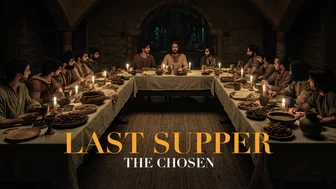
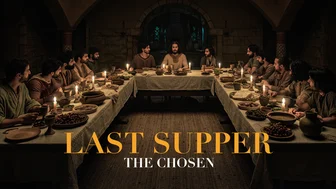
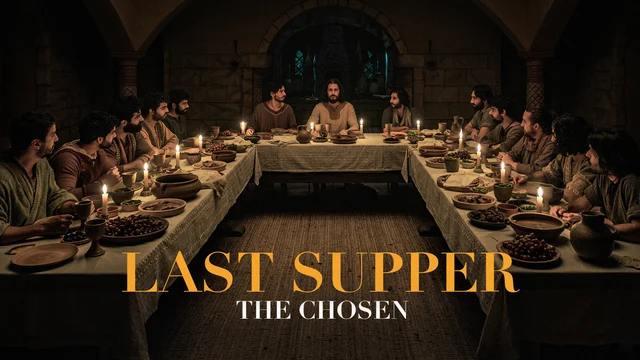
As the Chosen is releasing this coming week and we reflect on Easter and leading up to Easter, we’re going to be diving into different scenes of the Chosen, give you a preview of what’s to come, but also kind of go a little deeper. As you looked at that scene, you could see the intensity and the passion and the hurt and the betrayal that Jesus felt in his heart as you watch that scene in the upper room. And we all know who the one that betrayed him was, the one that sat right there on the left side. Of him as he was sharing what would happen. But we’re going to go into the text here and look a little deeper because there’s more to the story than that which was inspired by the film.
So if you’ll pull out your notes today and follow along with me. And we’re going to look at that account in John 13, beginning with verse 21. And it says this. After he had said this. Jesus was.
Troubled in spirit and testified, truly, very truly, I tell you, one of you is going to betray me. His disciples stared at one another at a loss to know which of them he meant. And one of them, the disciple whom Jesus loved, that’s John, was reclining next to him. And Simon Peter motioned to the disciples and said, ask him which one it means. That’s why I love that scene of Peter just looking at him.
We’ll gag him. We’ll take care of him right now if you just let us know. I love that about Peter. Leaning back against Jesus, John asked, He said, lord, who is it? And Jesus answered, it is the one.
To whom I will give this piece of bread when I have dipped it in the dish. Then, dipping the piece of bread, he. Gave it to Judas, the son of Simon Iscariot. And as soon as Judas took the bread, Satan entered into him. What a powerful statement there.
A real heavy statement to say. So Jesus told him, what you’re about. To do, do it quickly. But no one at the mill understood why Jesus said this. In fact, you know, people trusted Judas.
Judas was. He handled the money. He was somebody that they wouldn’t have ever expected. I can’t even imagine what Jesus was thinking. The betrayal he felt of one of his closest friends.
And since Judas had charge of the money, some thought Jesus was telling him to buy what was needed for the festival or to give something to the poor. And as soon as Judas had taken the bread, he went out and it was night. It’s a question that sits on the. Heart of, or my heart, at least every Easter season that I think, why? Why Judas?
Why would he do such a thing? He saw the miracles of Jesus. He walked with him. He heard his teachings. He had been with them.
He knew God, he experienced God. Yet why? Why would he betray Jesus? It’s certainly a question that has nipped at the heels of scholars for centuries. For years.
For years. Some say, well, Judas was trying to kick start a revolution, maybe so. Or he was consumed with anger because of the direction that Jesus ministry was taking it. As we see in the film in past episodes, if you’ve been watching the Chosen, that’s kind of. They took some poetic liberties to suggest that Judas was just very frustrated because Jesus wasn’t taking directions that he thought he should take.
Was he simply fated for this role? Or was he really possessed by the devil himself? And all of these are fair things to think about, fair thoughts. And maybe a combination of these things probably pertain to this. But there’s one we haven’t mentioned, or I haven’t mentioned, I haven’t mentioned.
And it’s staring us right in the face. And that’s what I want to talk about today. So I’m going to take us to a parallel. Well, not necessarily a parallel passage, but a past event that involves a meal as well. And many of you know it as the Feeding of the five thousand.
Feeding of the five thousand in Jesus ministry. In John 6, 1:13, we see this event take place and it says sometime after this, Jesus crossed to the far shore of the Sea of Galilee. And a great crowd of people followed him because they saw the signs he had performed by healing the sick man they loved. They wanted some more healing man. We got to find this Jesus.
Where did he go? We’re looking for him. Could you imagine the crowds? He’s trying to get away from him. And they’re like looking for him, thousands of people chasing him down because he was healing the sick and, and doing all kinds of miracles and signs and wonders.
And then Jesus went up on the. Mountainside and sat down with his disciples. The Jewish Passover festival was near. And when Jesus looked up and saw the great crowd coming towards him, he said to Philip, where shall we buy bread for those that need to eat? These people, they need to eat.
I love how Jesus was thinking about the needs of the people when the people were only thinking about the needs of themselves. And he asked this only to test him, for he already had in mind. What he was going to do. He was preparing for the miracle that was getting ready to take place. And then Philip answered him, it would take more than half a year’s wages to buy enough bread for all these people, to give enough to all these people.
Another of his disciples, Andrew Simon Peter’s brother, spoke up. Here is a boy with five small barley loaves. I’m talking about small, maybe bun size, burger bun size. And two small fish. How far will this go among the people?
How could this work? And Jesus said, have the people sit down. There was plenty of grass in the place. And they sat down about 5,000 men that day. And that’s not including the women and children.
Thousands and thousands and thousands of people were sitting down that day. And Jesus then took the loaves and gave thanks and distributed to those who were seated as much as they wanted. And he did the same with the fish. He blessed it and broke it. And when they all had had enough to eat, he said to the disciples, gather the pieces that are left over and let nothing be wasted.
Let nothing be wasted. So they gathered them and filled 12 baskets with the pieces of the five barley loaves left over by those who had eaten. This was a very, very memorable event, I’m sure, for the families that were there that day for the rest of their lives. They probably remembered that event. We remember that event.
It’s one of the most famous of the miracles. When we think about Jesus and his miracles, we think about the feeding of the 5,000. But I bet you as they were witnessing this, they probably thought back to another event even further back in history. And it is when Israel was in the wilderness in Exodus 16 and God provided manna from heaven. If you remember, not long after the deliverance, after the Red Sea, God had done all these miracles.
He had showed them so many signs and wonders. God was even in a pillar of fire. They witnessed God. They Saw God. They saw the glory of God happen right in front of us.
He did these extraordinary things. And here they are. Here they are. And they’re grumbling. They’re grumbling.
God led us out here. They grumbled against Moses and Aaron. Why did God lead us out here? Why did we go? Why are we here?
Why hasn’t God done anything? Why aren’t we provided for? Because I have needs. I have wants. We might as well go back to Egypt, back into slavery.
I’d rather go back into slavery and get what I want than be out here by myself with nothing. Because God is not answering what we. Want, what we need. And I’m sure as they thought about that event, they looked back and God provided bread from heaven. He woke every morning and they went out and they found bread in the fields.
Could you imagine that, man? That would be nice, you know, just to wake up and go in the backyard and get some sweet bread. You know, get it before the day goes by, because it goes bad quickly, as it said in Scripture. But, man, Max, you want to make a sandwich? Go in the backyard, grab yourself some bread.
Reading on John, John 6:14, he says this. After the people saw the sign Jesus performed, they began to say, surely this is the prophet who is to come into the world. They started to see it, and they were like, wow, this is the guy. And Jesus, knowing what they intended to come and make him king by force. He knew it.
He withdrew again to a mountain by himself. So the people were rushing in, we’re going to make him king. This miracle worker, this powerful man of God, the Son of God is here. Let’s make him king. The but he withdrew and he departed from them because he knew exactly what they were thinking deep down inside of them.
In verse 25, if you jump ahead, it says, when they found him on the other side of the lake, they asked him, rabbi, when did you get here? So they found him. They ran across the lake to find him. And Jesus answered very truly. I tell you, you are looking for me not because you saw the signs.
I performed, but because you ate loaves and had your fill. Jesus knows what they’re seeking. They aren’t seeking him. They’re seeking what he can give them. They’re not seeking the Master.
They’re seeking what’s on the Master’s table. And when we seek what’s on the Master’s table, we miss out on so much of what God is doing or what God is showing us or what God wants to do in our lives. Verse 35, it says, and then Jesus declared, I am the bread of life. He says, I am the bread of life. Whoever comes to me will never go hungry.
And whoever believes in me will never be thirsty again. But on and on and on, the rest of this passage and the rest of this chapter, they say, but we need, but we want. When are you going to do this? They were focusing on the bread of now rather than the true bread that was in front of them. And over and over again, Jesus reminded them that unless you see what’s in front of you, you will never experience fully what it means to go, to be full, to not be thirsty, to not be hungry.
Because here’s the first point I want to make today. We all have a deep hunger for the bread of this world. Deep down, we hunger for this world. What do I mean by that? Well, we all need food, we all need clothing, right?
We all need houses. We like comfort, we like peace, we like quiet. And they’re not necessarily bad things. They aren’t bad things. And it’s okay to ask for them.
In fact, Jesus meets their needs and he meets our needs all the time. It was not wrong for the disciples to say, we need to feed them their desire to feed them. It wasn’t wrong for Jesus to think and look at them and say that the desire was there. And that’s what Jesus does best, he meets our needs. But what Jesus was getting at is that those things are fleeting, they’re temporary.
It only fills you up for a short amount of time. And as the story tells us, the people want more and they want to be given more. And the more you give them, the more they want. And they fail to see and they fail to believe. And there seems to be a glimpse for a moment in verse 34, where they’re actually seeing Jesus for just a second.
Because they say, lord, always give us this bread that you’re talking about. We want this bread. But they keep thinking with their bellies. And when we think with our bellies, we think short term. When we think just flesh and blood, when we think just here and now in the immediate, it’s easy to miss out on what God is really doing and what God is really how God is really moving.
And we get caught up and sidetracked on what God’s plan is really for our lives. Verse 41. At this, the Jews there began to grumble about him because he said, I am the bread that came down from heaven. And they said, is this not Jesus, the son of Joseph, whose father and mother we know? How can he now say, I came down from heaven.
See, they were like, oh, we got a problem here. This guy’s calling himself the Bread of Life. He’s calling himself actually the Bread. And it says this in verse 60. And these are his followers.
On hearing this, many of his disciples, not the crowd, because the crowd started walking away when they heard this teaching because they weren’t getting what they wanted and they couldn’t accept what he was trying to say to them. And it says here, on hearing it, many of his disciples said, this is a hard teaching. Who can accept it? And in 66 for this time, many of his disciples turned back and no longer followed him. This is Jesus, the Son of God.
Miracles, signs, wonders, things happen, happening. Teachings that people had never heard before. This is amazing, amazing man. Yet people were turning away because the teachings were just too hard. Because their bellies wanted to be full rather than their souls.
When you focus on your stomach, you. Miss out on what you truly need, the greater thing that you need. And we can easily miss out on. God himself, His face. As we were singing earlier, I desire to see your face.
I have seen your face. And we miss out on seeing his face and experiencing him in a personal way, in a powerful way. When we focus on the immediate, when we focus on the here and now, we think with our stomachs and we. Lose sight of what really matters. We no longer can see God as the source of what we have, because we’re no longer thankful.
Because we see that we earned it ourselves, that I’m my own God and I provided for myself. And we grow cold to God in that way. Or we haven’t got from God what we think we need. So we don’t want him. God works for me.
He’s a genie in a lamp. He’s Santa Claus. And if he doesn’t answer my prayer, then I’ve got a problem. The Bread of Life was right in front of them. But they could not see the thing that really touched the deepest part of their soul because they were busy with the here and now.
What can I get from him now? How can he feel my belly right now? Now. And then Jesus turns to his disciples. I can just imagine the pain of Jesus as I reflect on this.
He looks at his immediate 12 after, you know, a hundred and some change probably walked away from them. If you don’t know how Jesus ministry worked. He had many disciples. He had his close 12. He had his three.
And then he had hundreds that would follow him. And then there were the crowds and everybody would gather around and Listen to him and follow him from place to place. But then he saw the people start to turn away, possibly concerned, dismayed, maybe in disbelief of what was taking place, or even some deep hurt because Jesus was human. He was hurt. He felt betrayed by the people.
He felt just this deep sorrow in his heart. And he looks at his 12 and he says, do you not want to leave me too? Do you want to leave me too? You do not want to leave me too, do you? Peter says, I love.
Peter says, where are we going to go? You are the source of life, man. I’ve given my whole life up for you. We believe you have the words of eternal life. Where are we going to go?
Then Jesus replied, have I not chosen you, the 12, yet? One of you is a devil? And I think it’s very interesting how in verse 71, John sets this specific thing apart from. It’s like it’s just thrown in there for no reason at all, right? He’s talking about this situation and he talks about this devil.
He meant Judas, the son of Simon Iscariot, who, though one of the 12. Was later to betray him. It’s very interesting. It’s foreshadowing the clip that we saw earlier today. You can’t help but think once again, why Judas?
Why would you do this? Why? Because he thought with his stomach. He thought about the here and now. He failed to really see what was in front of him.
He was focused on the wrong things. He was focused on the glitter rather. Than the deeper work. See, God was doing a deeper work in the rest of the disciples. When he mentioned, made that comment, are you going to follow me?
He was doing a greater work. But John seems to be indicating, as some commentators say here, that Judas was the pretender. He pretended that he was all in, but was he really? He pretended he is the bread of life and I’m willing to give my life for you. But underneath, he had something different in.
Mind of what was really eternal life to him. And that was the immediate. And we see that Judas throughout Jesus ministry. We see a reoccurring thing that takes place over and over again. Dipping into the money bag or scolding Mary of Bethany for breaking this very expensive perfume on Jesus feet that could have been used for ministry and ultimately paid.
A paid act of betrayal where he took on. He gave Jesus away for just measly silver. Something that was fleeting because Judas thought. He knew what he needed. He thought.
He thought that would fill the deepest. Parts of his soul. He walked with Jesus. He knew Jesus. He experienced Jesus but he was missing out because of his stomach.
His stomach was roaring for more and more and more of that. And Jesus didn’t play to that tune. That’s not how Jesus saw it. So when the 30 pieces of silver came along, he couldn’t resist, he couldn’t get away from it. He wanted little more of that bread.
He wanted a little more of that life. We all have a deep hunger for. The bread of this world. That’s the problem. That’s the situation that we’re dealing with.
But here’s point two. But all the bread we seek, and sometimes even secure, always fails to satisfy all the bread we seek and all that we secure and all that we strive for. We why does it never seem to ever satisfy the deepest places of our heart? You don’t need to go any further than looking at Judas. And we go over, if you’re bouncing, I know we’re bouncing a lot today.
But Matthew 27:1 5, we see the account of when Judas makes the deal. Early in the morning, all the chief priests and the elders of the people made their plans and how to have Jesus executed. So they bound him, led him away and handed him over to Pilate the governor. And then in verse three, Judas realizes that this hasn’t fulfilled the deepest part of my soul. And when Judas, who had betrayed him, saw that Jesus was condemned, he was seized with remorse and returned the 30.
Pieces of silver to the chief priests and the elders. And he says, I have sinned, he. Said, for I have betrayed innocent blood. What is it that. And they say, what is.
What is it that to us? What is that to us? They replied, that’s your responsibility. So Judas threw the money into the temple and left. And he went away.
And he hanged himself. He hanged himself. We all have a deep hunger for. The bread of this world. But all the bread we seek.
And. Sometimes even secure, just never ever, ever satisfies. None of it satisfied Judas. None of the bread of world will ever satisfy any of our hearts. No, no amount of money strive.
If money’s your God, if money’s your motivation, it’ll never fulfill that deepest place in your heart. If pleasure is what you’re seeking, it will never amount to anything. If the approval of others, if what others think and what others see you and say about you really matters, it will never satisfy. If you’re working your life to try to appease other people, it will never ever, ever satisfy you. Always be trying to prove yourself.
No amount of comfort in his life. No amount of comfort in his life. That’s why when you go for a comfortable vacation and you come back and you feel like you need to go. On vacation again because it’s fleeting. That’s why we buy a new surfboard and after about six months, that surfboard, you ready for the next surfboard and the next surfboard because it’s right.
That golf clubs, those golf clubs, you know, you got to have the best ones. You got to get the next number or the next brand. It just never helps. Clothes, cosmetics, travel, destinations. No amount of influence will ever satisfy the deepest parts of our soul or never satisfy the deepest parts of our hearts.
It’s like a hamster on a wheel chasing carrot. Just keeps going and going and going until we’re worn out and we’re tired and we’re depressed and we’re just at a dead end. That’s what the world does. That’s why when we run after the bread of this world, it leaves us hungry. It leaves us empty.
Why do I feel so empty? Some of you may be saying that right now. Why have I tried everything? It’s been a good life even. But I still feel empty.
We all have a hunger for the. Bread of this world. But all the bread we seek, and. Sometimes even secure, always fails to satisfy. Can we just stop thinking with our.
Stomachs for a moment and think about our souls? Would you take an opportunity just to look deep down? Just to think deep down, not about the things. Of this world, but the. Things of the soul?
What is it that we really need? What is it that you really need? There might be a lot of things that come to mind, but for the. Moment, go into the deepest, deepest place. Putting aside everything and God.
Go deeper and deeper and deeper. There’s one word I believe that covers it all. That’s a need for forgiveness. A need for reconciliation with a God who created us. Forgiveness for our betrayal of God.
Our stomachs roar for bread, but our souls roar for reconciliation with the One who created us, made us who we are. The God who claims that, we claim to know and believe and obey that we’ve done wrong to. That we put other things in place of him, that we put other gods before Him. If we could have the bread of life, that is Jesus, what would that do? How would that make us look at life differently?
If we could have the bread, how. Satisfying would that be? Jesus, as he told the people over and over again, was the bread of life. He said this in 35. Then Jesus declared, I am the bread of life.
Whoever comes to me will never go hungry. And whoever believes in me will never, ever thirst, never go thirsty. Verse 50. But here is the bread that comes down from heaven, which anyone may eat and not die. He’s saying, I got eternal life here.
Guys, stop focusing on the here and now. Eternal life is waiting for us. Let’s get started now in eternal life. Let’s walk that way. He says in 51, I am the living bread that came down from heaven.
Whoever eats this bread will live forever. The bread is my flesh. Flesh which I give for the life of this world. On hearing it, many of the disciples, they turned away. This is just too hard to handle.
I can’t give up here and now. And they stopped following him in Luke 22, 14, 19. I know I got a lot of verses here today. Y’ all are probably like, man, you’re. Reading the whole Bible today.
But it’s just so important in this. Easter season to see what we have. Here, the meaning of this. We’re getting ready to do this here in a minute. We’re getting ready to partake of the flesh and the blood.
And I want you to understand what it really means as we look at what eternal life really is. And he said this in verse 14. When the hour came, Jesus and his. Apostles reclined at the table. And he said to them, I have eagerly desired to eat this Passover with you before I suffer.
For I tell you, I will not eat it again until it finds fulfillment in the kingdom of God. I heard that because it is. It’s heavy. And after taking the cup, he gave. Thanks and said, take this and divide it among you, for I tell you, I will not drink again from the fruit of the vine in this life.
I will not this temporary fruit of the vine until the kingdom of heaven has come. That’s the true. That’s the true vine that I’m going to eat from. And he took the bread and gave thanks and broke it and gave it to them, saying, this is my body given for you. Do this in remembrance of me.
And he took the cup in Matthew 26. And when he had given thanks, he. Gave it to them, saying, drink from it, all of you. This is the blood of my covenant which is poured out for many for the forgiveness of sin. Our souls desire forgiveness.
And we’ve got a God who gave his life so that we could have that, so we can be completely fulfilled. He says, this is the blood of my covenant which is poured out for many for the forgiveness of sin. I tell you, I will not drink. From this fruit of the vine from now on until the day When I drink it new with you. In the Father’s kingdom.
So when we think with our souls and not our stomachs, how can we not see that one of the deepest, deepest desires of our heart is to have a relationship with our God who gave his life so that we no longer had to feel condemned, we no longer had to feel guilty for what we had done. But our souls have this insatiable desire to be reconciled with God. For the times we’ve walked away from God, like the crowd walked away from him when they couldn’t get what they wanted, or the times that we focused. On the glittery things of this world. Instead of seeing Jesus for who all.
He is, like Judas. The bread that is truly Jesus. While we take this so that the bread of life, the true bread of life, we eat and drink this because we realize that Jesus is the only bread of life that will actually fulfill, will fill the bellies of the soul for eternity. Jesus, the bread of life, satisfies our deepest, deepest, deepest hunger. That’s what Judas was missing.
He didn’t truly see what he had in front of him. Can we see what we have in front of us? In conclusion, there are some similarities between Peter and Judas. If. Both betrayed Jesus, both turned their backs on the bread, both had just as much access to the table of.
Jesus as the other. And both chose betrayal when they had. The opportunity to stand up and be confident. But Peter does something different. The difference between Judas and Peter in John 21:1 and 19, after Jesus had risen, they were out on the boat.
Peter and some of the disciples were out on the boat fishing. They just decided to go out and fish that day, I guess. I mean, Jesus, he’s not around anymore, so I guess we’ll just go back to fishing. So they’re out there. But Jesus shows.
Up on the shore and he yells out, throw that net on the other side. They threw it on the other side. And there were so many fish, 120something fish, I think is what text says. So the net was so full of fish, so abundant. He says, hey, come on over here, let me build a fire on the beach.
Let’s hang out for little wild guys. And remember, Peter betrayed him thrice. Three times. Peter denied Jesus. And Jesus is on the beach eating.
Fish with his boys, having a good time. And then those tender eyes, I’m sure, looked over at Peter and said, do you really love me? You really love me, Peter? He said, you know I do. God, Jesus, of course, then feed my lamb, feed my sheep.
He asked him again, do you really love me. Why do you keep asking this? Of course, feed my sheep. And he asked a third time. Isn’t it interesting?
The betrayal was three times. The denial was three times. And Jesus three times asked him, did he love him? And his final response was, of course. I’d do anything for you, Jesus.
Feed my lamb. And then he tells them that one day he would truly eat of the. Flesh and drink of the blood of. Jesus and that he would die. That Peter would give his life for Jesus in order that people know who Jesus is.
We have two different conclusions. All of them had the same opportunities. One took his own life and is. Seen as the man of perdition. But the other, who did just as bad as them, found Jesus as the bread of life.
And we used and gave his life for him. Can we praise God? Can we praise God? Can we praise God today, Father? We thank you, Lord.
Thank you, Lord, that you gave your life for us. Lord Jesus. When we see the scene as we started today, Lord, we. We know how it must have hurt. You.
How it must have affected your. Friends, your closest friends even to know. That you were going to be betrayed. And that you were going to suffer. But you knew it had to be done.
Because you looked upon them and you looked upon the world. A world that said they didn’t want you. A world that turned their back on you, Lord. A world that walked away from you when it was too hard, when it. Came to actually surrendering.
But God. Jesus, you took on the pain. You took on the betrayal. And we don’t want to be people who allow the temporary to fuzz our view of you, to shade the light that is waiting for us. The deepest parts of our soul that.
Will be filled, Lord, if we only allow you to be number one. I pray God that we have a people today that would throw off all. All the gods and all the temporary satisfaction of life. Because nothing satisfies. Lord, if you’re here today, just take this moment and just cast your burdens.
On him for a minute and just ask, Lord. Lord, I know you take your yoke. Azizi, and burden his life, but I let. I let other burdens take control of my life because I’ve been wanting to be satisfied by something else. Would you just say, lord, forgive me.
Forgive me, Lord, I want to make you number one. Lord, I’m ready. I’m ready to surrender. I’m ready to follow you. I’m ready to follow hard after you.
I’m ready to do the hard things. As Jesus says in the Chosen. Are you ready to do the hard things. I’m ready to do the hard things, Lord, because you are so worth it. The things of this world, the things of this life that will never satisfy.
The things that we even can secure, never bring security. You are the bread of life, Lord. Maybe there’s somebody here who’s never accepted. Jesus as the bread of life into their heart. You can make that decision today by simply opening up your heart to him and saying, lord, I believe that you.
Died on the cross for my sin and I need to be forgiven. Won’t you just tell him, come to my life? There’s nothing magic in the prayer. It’s just confessing with your mouth and believing in your heart. And he says, you will be saved.
Lord, I come into my heart. I confess that I can’t do it without you, Lord, I’ve fallen far from you. But today I find hope in you. I find life in you. I follow you, Lord, and there’ll be no turning back.
There’ll be no turning back. Amen. If y’ all would just stand with. Me for a minute. And will close with communion.
About three. Weeks or so from. From Easter. And normally I do this the week before Easter. And maybe we’ll do it the week.
Before Easter as well. There’s never not enough communion, right? We can always. This is an act of worship. It’s an act of worship.
It’s just as much an act of worship as singing songs. It’s just much of an act of worship as being baptized. It’s as much of an act of worship as anything else. So let’s reflect on the body and. Blood of Jesus today.
You’ll take the wafer, which represents the body of Jesus. Bread, which represents the body of Jesus. And I want you just to think for a minute. I want you to go back to the eyes as. As Jonathan Roumie portrayed Jesus in the.
In the movie. He does such a wonderful job of just showing the emotion in those eyes of what Jesus must have been feeling, that that body was brought, that the blood ran down. And as an agonizing pain yelled out, father, Father, why have you forsaken me? The pain he felt all because he wanted you to be forgiven. Could we remember that today?
Could you worship him by taking the body of Christ? And in the same manner. He took the cup, he blessed it. He said, not only is my body. Going to be broken, my blood will be shed.
You’ve always heard it, disciples, that the. Shedding of a perfect lamb forgives sins, but I’m going to fulfill it forever. And ever and ever. You will no longer need lamb. I’m going to be the fulfillment of it all.
Let’s remember that today as we take the juice. Father, we worship you. We worship you as a church corporately. Here today as savior and king. God, thank you, Lord, for all that you are and all that you’ve done and all that you continue to do.
Lord Jesus, thank you so much. Thank you so much. We long to see your face. We long to worship you. We long to praise you, Lord.
And as we’ve just did, Lord, let that be a confident sign, a sealed sign, that you are the bread, the only bread that we want, the only bread that we need. Let us walk out of here today. Lord, knowing that you, who has the power to save, who has the power to rescue the world, are everything that we’ve ever needed and everything that we’ve ever wanted. And you alone are God. And we ask this in your name.
Amen.