 Play this video
Listen to this messageDownload MP3
Keeps playing while you browse the site.
Key Points
- Introduction of 'The Last Supper' series emphasizes Jesus’s promise that grief will turn to joy, central to His final teachings during Passover.
- Old Testament examples illustrate a pattern of grief transforming into joy, shown through stories like Abraham's birth of Isaac and Joseph's rise to power.
- Jesus performed several miracles that exhibit the transition from grief to joy, with a key promise to His disciples before His impending death.
- Disciples experienced profound grief after Jesus’s crucifixion, mirrored by Saturday's silence, highlighting the struggle to hold onto hope amid sorrow.
- Mary Magdalene discovers the empty tomb, marking the beginning of transformative joy and confirming Jesus’s resurrection to the disciples.
- Key messages established: Jesus as the bread of life, King of Kings, and the resurrected figure instilling hope and joy in believers.
- Hudson Taylor’s missionary journey and profound losses underscore dedication to the Great Commission and its enduring impact in China.
- Stories of John Patton and Jim Elliot highlight incredible sacrifices and eventual joy through conversion and forgiveness among indigenous peoples.
- Steve Saint’s narrative of forgiveness showcases the redemptive power of understanding God’s plan amid personal tragedy.
- Series concludes with promises of a joyous eternal celebration in heaven, affirming the belief in a new creation free from suffering and pain.
Questions & Answers
What does it mean to have faith?
Having true faith involves trusting in a higher power and believing in the possibility of growth, purpose, and guidance beyond what we can see. It provides strength during difficult times and encourages us to hold onto hope and integrity. Faith is the confident trust in something greater than ourselves, even when we cannot see or fully understand it, and it gives life purposeful direction by encouraging belief in positive outcomes and moral integrity. As expressed in scripture, such as Hebrews 11:1, faith is the assurance of things hoped for, the evidence of things not seen. It reminds us…
Read the full answer →What is the purpose of life?
Life's purpose is often found through connection, service, and personal growth. Aligning your actions with core values, contributing to the well-being of others, and pursuing authentic passions can provide deep fulfillment. Reflecting on what brings genuine joy and how your unique talents can serve a larger good helps uncover your purpose. The deeper purpose of life often involves seeking meaning, connection, and growth that transcend material possessions. It includes fostering relationships, developing inner qualities like love and compassion, and aligning with a higher sense of purpose or…
Read the full answer →How can I find hope during difficult times?
Hope remains available even amid life’s messiness because it is rooted in the belief that difficulties are temporary and part of a larger purpose. Many spiritual teachings remind us that setbacks, failures, and hardships are opportunities to grow stronger and more resilient. Just as a community or person is in a constant process of becoming better, our hope encourages us to trust that things are not final. There is a divine purpose working behind the scenes that sustains us, even when we don’t see immediate results. Hope arises from believing that challenges are temporary and that better…
Read the full answer →How does love influence my relationships and life?
Love is a fundamental virtue that fosters understanding, compassion, and connection. Acting with love helps build meaningful relationships and guides moral decisions. 1 Corinthians 13:13 highlights, ‘And now these three remain: faith, hope, and love. But the greatest of these is love.’ Love inspires kindness and patience, shaping a fulfilling life.
Read the full answer →How can I forgive myself and others?
Forgiveness is a vital step toward inner peace and healing. It involves releasing feelings of anger or resentment toward others or oneself, recognizing that holding onto pain only prolongs suffering. By choosing forgiveness, you open the door to grace, allowing love and compassion to flourish. Understanding that everyone has flaws and makes mistakes helps foster empathy. Forgiving doesn’t mean forgetting, but rather choosing to no longer let past hurts control your future. Forgiveness allows you to let go of past hurts, freeing you to move forward with a lighter heart. As Ephesians 4:32…
Read the full answer →Read the transcript
You will not see me. And then after a little while, you will see me. Truly. Truly, I say to you. You will weep and lament, but the world will rejoice.
You will be sorrowful, but your sorrow will turn into joy. In a little while, let’s talk about kind of recap on where we were the last few weeks. We’ve been in a message series called the Last Supper. We’ve actually been walking through the Chosen’s Last Supper. If any of you, you’ve seen the new episodes yet, praise God.
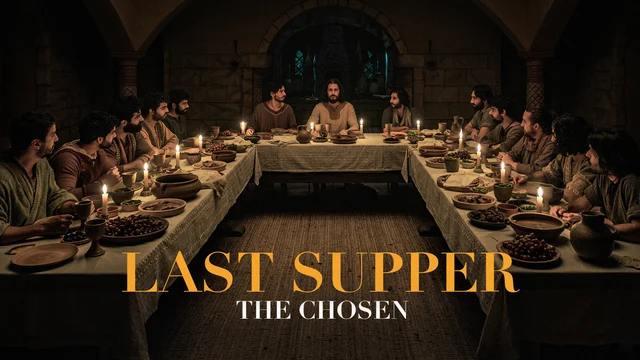
Just no spoiler alerts, but things happen. You can go read your Bible and find out what really happens there. But we’ve been playing clips from the Chosen and teaching on this idea of the Last Supper. And it’s where Jesus and his disciples are celebrating a supper together, the Passover meal. And it’s the foundation of everything that was soon to transpire.
It was there where Jesus offers his last stretch of teachings. And he says that one statement that we heard on the screen there is, he says truly, very truly. I tell you, you will weep and mourn while the world rejoices. You will grieve, but your grief will turn to joy. Your grief will turn to joy.
You will mourn and weep. There will be grieving. And sometimes it seems like the world will be rejoicing in your grief. But hold on, there’s joy. Hold on.
He’s going to turn your grief into joy. And when Jesus speaks of grief and being turned to rejoicing, he’s speaking of the work that God has been doing from the beginning of time. He’s been working this plan out from the very beginning. So let’s go to the Lord today and just ask for his presence to be here and his anointing to be on the Word today. Lord, Father, we just thank you.
We thank you that we can celebrate you and your resurrection. And we know for a fact that you are who you say you are because of our lives that have been changed. God help us, Lord, to look at scripture. Some of the last things you said before you went to the cross, some of the last things you said before you were resurrected. May we learn from them and may it go with us.
And may we be more like you and walk with you even at a greater level. We ask this in your name. Amen. So this has been happening from the very beginning. And if you have your notes, you can pull that out and follow along.
I’ve got a few points there. Got some scripture there for you. If you have your Bibles, you can open Those up as well and walk along with us. Also, we have on the Bible app, we have an event set up for those of you who are Bible app savvy. And you can go in there and pull up and take some notes there as well.
So this has been happening. This is God’s plan from the very beginning. To turn our sorrow into rejoicing, to turn our grieving into something incredible, something joyful, something that’s worth praise. He’s been working that. And when I say from the very beginning, I mean the very beginning.
We go all the way back to Adam and Eve in the Garden of Eden. They walked with God. They talked with God. They experienced his presence. They were in heaven.
Heaven, literally meaning the presence of God. They were in. They knew him like no one else has known him that’s lived so far until they are in heaven with him. And one day they eat of the forbidden fruit. And what happens?
Sin enters in the desire to be like God. And they were separated from God and no longer could be. Could eat from the tree of life. They had to exit the garden. It even says, like cherubim were set around the garden, demonstrating or symbolically saying that there was a chasm, as we worship today, at that lyric.
The chasm that was separated, that separated us from God and ourselves was there. And that’s a grief. That was a grief that they felt. This idea that I can’t any longer walk with God as I did before. I am no longer able to walk in the garden with him in the cool of the morning and hear him and listen to him and be with Him.
It was a great travesty for them. It was hard. It was something they had never experienced before. Labor, pangs. And what sin brings on a human being.
Because of sin, they were separated. But then in Genesis 3:15, as we go through Genesis 3, it goes down to Genesis 3:15, and here’s where the joy comes in. He says, and I will put enmity between you and the woman, between your offspring and hers. And he will crush your head and you will strike his heel. Meaning that Satan, the evil one, would ultimately be crushed.
That’s something to rejoice about. That sin will be crushed. You can only harm Jesus on his heel on the cross. It was prophetically viewed at the cross, where Jesus lifting his feet up on the cross to get breath, it would bruise people’s heels. Did you know that was a prophetic statement?
And which happened that people who were crucified, they had bruised heel. That’s all he could do. For Jesus, though. He could hurt, he could kill Jesus, but he would raise from the dead and he would crush the evil one. He would crush sin.
And that’s worth rejoicing. He has a habit of taking things that are grieving, that we grieve about sin, the shame, the separation. And he turns them into rejoicing. Amen. He turns them into rejoicing.
We could go back to Abraham and Sarah and their grief and their inability to have a child. And. And suddenly what does God do? He promised them. Where’s the promise?
Where’s the faithfulness? Where is God? Some of you are in that season. Where are you, God? I can’t hear you.
I can’t. I don’t know. I know you have a plan. I know you’ve spoken to me, but where are we going with this? But what happened?
Suddenly, pregnancy enters into the picture with Sarah and Abraham, even at an old age, enjoying his faithfulness and his promise. And that’s worth rejoicing. Then we have Jacob, who was deceptive to his brother, and he was exiled and he witnessed hardship, but he wrestled with God. He was in a place where it was grief that he felt. But what happened?
God showed up on the scene. He wrestled with God and God prevailed. Right? Amen. And God is upright is what Israel means.
God prevails. One who wrestles with God and his descendants. And the 12 tribes of Israel were his descendants. And we see forgiveness and repentance and God’s unwavering presence and God’s unwavering blessings. See, we see things go from grief all the way to rejoicing.
Because that’s what Jesus does. He brings grief to rejoicing. Joseph, betrayed by his brothers, put into slavery. And for years and years and years he waited. Jesus had a promise for me.
Or God, rather, had a promise for me. God gave me dreams. And those dreams have not yet been fulfilled. And he waited and waited. And what happened one day, ultimately, he was the salvation of his people.
God brought him into rejoicing. He saw what God had done. Even though he had been through a hard season. He had been through many years of slavery and many years of separation from his family and from his people. What did God do?
Put him on a throne so that he could deliver people from the bondage of the Egyptians. Amen. That’s what God does. He puts people on thrones. He lifts us up.
And then we have Ruth, who lost her husband, didn’t have anything. He lost it all. She lost it all. She lost everything. And she had to move her life to another, a country she was not familiar with.
She followed faithfully with her mother in law. And then she runs into a kinsman Redeemer named Boaz, God our redeemer, right? We see God in that. And her offspring would ultimately, as she married Boaz, her offspring would be in the lineage of Jesus, that he would use someone like Ruth, that he would use someone like Joseph. And we can go on and on with the stories of David and Elijah and the greats of the Old Testament.
And at a grander scale, we see Israel’s exile and deliverance over and over again. Egypt, the Red Sea, the wilderness experience and God’s provision and God’s promise. Exile to salvation and enemies such as the Philistines, the Babylonians, the Persian Empire. And God always delivered. God always came through.
He would take their grieving, their pain, their separation, and he would bring it to rejoicing. It’s been the story from the very beginning. This is what God’s plan has been all along, to bring things that are grieving and sorrow and bring it to rejoicing. This has been the work of God since the beginning to turn our grieving, rejoicing from the very beginning. And through the Book of John, we see Jesus doing that with the miracles, turning water into wine, healing the nobleman’s son, healing the lame, feeding the 5,000.
Jesus walking on water in the raging sea. Some of you are going through some raging seas right now, but Jesus walking on the water, peace be still, peace be still. Healing the blind, raising the dead, as he did with Lazarus. He helped the grieving and complacent disciples catch a lot of fish after the resurrection, right? We see that happening in the Book of John because this has been the work of God.
We see him turning terrible situations into beautiful things. That’s what he does. And this has been the work of God since the beginning to turn grieving into rejoicing. And this work usually takes some time, and it takes many years and it takes some loss. And it sometimes may be mixed with mystery and lack of understanding.
But throughout the Old Testament and in the unfolding story of Jesus, there was God ever and always to turning grieving into rejoicing. And all of this brings us to the upper room that night, late on a Thursday night. And those words of Jesus, truly, I tell you, you’ll weep and mourn, but the Word and the world may rejoice. You will grieve, but your grieving will turned to joy. See, Jesus knew of course, what was going to happen.
He knew that he was getting ready to be struck down. And while his disciples were struggling to hear this, and they didn’t even comprehend it, they probably didn’t even believe it. They didn’t understand it. They didn’t know what was happening. There was probably this nagging thing in the back of their head.
Possibly losing their teacher, possibly losing their friend, and entering into a very dark hour. And Jesus audaciously says, you are about to enter in such grieving. He’s actually telling him this. You’re going to grieve. It’s going to be hard.
You’re going to go through a time, a period, a season of grieving. And your grieving will be made all the deeper. When the world is rejoicing over you, over my loss, you will see the joy. Sometimes it feels like the world’s rejoicing over all the wrong things, right? Sometimes we go through those seasons where we feel like, why is everybody else joyful?
And I’m here, and I’m a follower of Jesus Christ, and I’m still grieving. I’m sharing his gospel, and I’m still grieving. I’m living my life for Jesus, and I’m still grieving. They’re rejoicing, and he says their rejoicing will increase as the world celebrates. But what he says, hold on, because your grieving will soon be turned.
Rejoicing and then onward as he marched to the death on the cross on that Friday, as we just celebrated Good Friday. And I wonder what it was for the disciples going through that Saturday after the death. What was going on in their head? I’m sure if you were a fly in that room, it would be completely silent, probably some weeping, some grieving. And they would, they would, they would think about that statement.
Possibly. And it echoed in their ears. Possibly. Truly, I tell you, there’s going to be grieving. But I imagine, I know I would be, that I would be in that room, and they’re thinking in the back of their heads, you know, he said, grieving into joy, sorrow into joy, sorrow into joy, and trying to hold on.
I imagine him trying to believe that in the middle of grieving. Have you ever been there in the middle of grieving, in the middle of heartaches, hardship? You’re just like, man, I’m just trying. I’m trying, Lord. I’m speaking it, I’m believing it.
But. And you don’t feel like it’s there, but you keep speaking it. But then we get to John 21 and 20, and I’m just going to read through this whole thing because I think it’s appropriate to count the whole story here on Easter because on that Sunday, early on the first day of the week, while it was still dark, Mary Magdalene went to the tomb and saw that the stone had been rolled away, rolled, removed from the entrance. So she came running to Simon Peter and the other disciples and the one Jesus loved, that is John, and said, they have taken the Lord out of the tomb and we don’t know where they have put him. So there was still lack of understanding, there’s still doubt.
There was no. They had no idea that this God, this Jesus had actually risen from the dead. They still didn’t get was. They didn’t. He’s not there.
Somebody must have taken him. So Peter and the other disciples started for the tomb. Both were running, but the other disciple outrun Peter just so that you know that John outran Peter. He wants you to know that he’s a little faster to reach the first. The tomb first.
I don’t know how else you can interpret that. Peter had a little weight on him, you know, it took him a little longer to get there. And he bent over and looked at the stripes or strips of linen lying there, but did not go in. He was probably a little nervous. He’s like, know about this and I love the detail.
And Simon Peter came along behind him and went straight into the tomb. Get out of the way, John, get out of the way. I’m coming in. And he saw the strips of linen laying there as well as the cloth that had been wrapped around Jesus head. The cloth was still lying in its place separate from the linens.
The reason that detail is there, so there can be no mistaking that Jesus resurrected from the dead, that there’s no way somebody could have just stolen his body, that it actually was. Everything was laid out, everything was there to say that this man raised from the dead and he walked out of the grave. And we can be assured of that. Then finally, the other disciples who had reached the tomb, the other disciple that had reached the tomb first, John, by the way, once again also went inside and he saw. He’s like, okay, I’ll go in now.
You know, Peter’s already. It’s not spooky. I think I’ll go in now because I want to be. I want to write myself in the Bible, you know, I want to write myself in Scripture. And he saw and he believed they still did not understand from Scripture that Jesus had to rise from the dead, still didn’t.
Then the disciples went back to where they were staying. And now Mary stood outside the tomb. Crying. See? Grieving.
Crying. As she wept, she bent over to look into the tomb. She’s grieving. And saw two angels in white seated where Jesus body had been. One at the head and the other at the foot.
And they asked her, woman, why are you crying? Why are you grieving? Why are you upset? Why are you worried? Why are you hurting?
Why do you feel like you’re alone? Where do you stand in that? Why do you feel like you’ve been betrayed? Why do you feel like everyone has left you? Why do you feel like you’ve been cast out of your family or cast out of.
Or lost your job or whatever that is? Why are you crying? Why are you worried? Why are you there? And then she turned around and saw Jesus standing there.
Sometimes we just need to turn around and look at Jesus. But she did not realize it was Jesus. Have you looked at Jesus and not realized it was Jesus? Sometimes I think we look at Jesus and we’re just still grieving and we’re looking at Jesus. But we don’t realize that this is the resurrected Jesus, that this is God himself that raised himself from the dead.
That can turn anything into joy. He can make anything happen. Nothing is impossible with him. And she turned to Jesus. Jesus was standing there.
She did not realize it was Jesus. And then he asked her, woman, why are you crying? Who is it you are looking for? Thinking he was a gardener. She said, sir, they have carried him away.
Tell me where you have put him and I will get him. And Jesus said, mary. Mary, some of you need to hear your name, Jesus. Say your name, Mary. And she turned toward him and cried out in Aramaic, rabbone, which means teacher.
Which means teacher. And Jesus said, do not hold me close. Do not hold on to me, for I have not yet ascended to my Father. Go instead to your brothers and tell them I am ascending to my Father and your Father, to my God and your God. And Mary Magdalene went to the disciples with the news.
I have seen the Lord. And she told them that he had said these things to her. And on the evening of the last of the first day of the week, when the disciples were together with the doors locked for fear of the Jewish people, they were still fearful. Jesus came and stood among them and said, peace be with you. And what happened after that?
After he said this, he showed them his hands inside. The disciples were overjoyed when they saw the Lord. Overjoyed. Their grieving was turned into joy. Their grieving was turned into celebration.
And in the first sermon we talked about and we Agreed that Jesus is the bread of life. We really need that no bread of this world will satisfy us, satisfy our deepest hunger. And then we agreed last week at Palm Sunday that the King of Kings and the Lord of Lords were wins our deepest battles. But this today I want to say this, this statement. Jesus the risen one turns our deep grieving to rejoicing.
That’s what he does. And while the death and burial and resurrection of Jesus was the key moment of God’s work in turning humanity’s grief to rejoicing, it was a moment of humanity’s enemy sin and greater death and defeat. But the resurrection is not the end of God’s word. God is turning our grieving every his plan is the resurrection is just the dawn of the day that is to come. I think of it as daytime when Jesus resurrection took place.
When the day comes, it’s in the middle of the night, isn’t it? When the day comes, it’s a dark, it’s a dark time. We don’t see the light. We don’t see the light because it’s in the middle of the night. But as the dawn approaches, what happens?
The light comes in and the light begins to stretch and the light begins to advance and the light begins to cover. So is with Jesus, the resurrection is just a start. He’s still working out the plan. There’s a lot of things to work out that we don’t even understand. The deep things of God, the deep things of his plan that we can’t comprehend because of sin and cause humanity’s defeat, falling from from God.
And he’s working all those things out. But one day, one day he’s going to bring it all to fruition. We see that working through Peter’s restoration, Paul’s conversion, the Ethiopian unit, the Philippian jailer, thousands of people crying out on the day of Pentecost. When Peter walks out, one who betrayed, who denied him three times, he walks out and thousands of people are saved in one day. Because that’s what God does.
He extends his good news and he’s reaching gentiles that are desperate to hear the good news and the gospel. Going the distances into lands that the Jewish faith could never reach. The early church surpassed even the furthest reaches of the Roman Empire. Because Jesus advanced, the light was advancing. His work is still going.
And just as the prophet Isaiah prophesied, a light has come to those who walk in darkness. A light is there, available to those who are walking in darkness, available to all people. God is working out his plan. Jesus, the Risen one turns the deepest grieving into rejoicing. I think of some of the missionaries in history.
If you knew their story, if you heard their story, you would see it plain that it was not an easy life. Think about Hudson Taylor, a missionary to China. Studied medicine and the Chinese culture. Headed to China in 1853 at the age of 21. He made this famous quote.
The Great Commission is not an option to consider. It is a command to obey. We don’t have an option to consider. Faced immense challenges. Illness, poverty, cultural barriers.
He had much personal loss. He lost his wife at just 33 years old. On missions. She died of a bacterial infection. Back then, they didn’t get the treatment we can today.
He lost several of his children. Out of his eight children, only four survived to adulthood. In fact, in one instance in 1870 alone, he lost his daughter Grace Maria, his other daughter Maria, in just a month, a month apart. He faced opposition. He faced criticism.
The world rejected him. You could say that’s grief. He faced riots and persecution in the Boxer rebellion. He watched 58 of his missionaries die, 21 children included. But what did that bring, some people may ask.
When I look at that grieving, the rejoicing is thousands of missionaries, hundreds of missionaries he sent out. And to this day, the church still goes on in China, even against government communism and government persecution. The church is still going today. Thousands and thousands of convert because this man answered the call of God. That’s joy.
God overjoyed. John Patton called to the New Hebrides and New guinea, called to reach cannibals and tribes. His wife passed shortly after he arrived, along with his newborn. There’s a story of him as he’s running from cannibals. He climbs up in a tree to escape them, and he stays there all night.
And he’s just rejoicing and thanking God for his presence. He said, the presence of God got me by sleeping in a tree. Death was at my feet. Yet God is so good. What was the fruit of his work?
Converted and baptized thousands of islanders, cannibal islanders, entire villages came to Christ. He had Bible translations in their language. He advocated for the islanders for social justice. And today that country is a Christian nation because Mr. Pat decided to honor the call of God and endure the grieving so that rejoicing could come.
Because that’s what God does. He’s continuing to expand his kingdom. One of my favorite stories is Jim Elliot. Jim Elliot. Some of you have probably watched the movie End of the Spear based on that.
Loosely based on that story, Jim convinced Four of his friends to go on a missionary journey to reach the Alka Indians along the Curry river in Ecuador, 1956. All missionaries, as they were landing on a plane to bring supplies to the people there, people they had been ministering to for months, surprised attacked them. They were. They were surprise attacked. And every one of them died by a spear.
They were killed later on. Elizabeth Elliot, his wife, and the wives of these men went to the tribes themselves. Generosity and forgiveness. This is what Jesus does. And begin to minister to the people.
And they were so blown away by their generosity. They were so blown away by their forgiving them for what they had done. The entire tribes, entire tribes came to Christ because of that. They turned their grieving into rejoicing because that’s what God does. Even when we lose, we gain, because that’s what God does.
He turns Jesus, turns our grieving into rejoicing. In that story, there was a man among the friends named Nate Saint. He was the pilot of the crew that went there. His son, Steve Saint, was witnessed or was obviously alive when this happened. He was very, very, very young.
He was five years old or so when his father passed away. When he heard about that. And for years and years, he says, for 50 years later, he recounted like, why would God do something like this? Why. Why would he take.
He was doing something good. He was trying to lead these people to Jesus. Why would he do that? And Steve said, 50 years later, we see that God used this incident to pave the way to this people group. Because after the murder, the women went there and the tribes were moved by their generosity and their forgiveness and peace was established.
And eventually the faith was established there. And Steve. Here’s what. See, Steve baptized the very man who put the spear in his father’s heart. We’ve got a picture of it up here if you want to show it.
Tariq. This man here, Steve said, he’s like a grandfather to my kids, a beloved member of my family. The very man who put the spear in his father’s heart. Now, as a part of the family of God, because that’s what God does. He takes grieving and turns it into rejoicing.
I love the statement he’s made about it. Why is it that we want every chapter to be good when God promises only that in the last chapter, he will make all the other chapters make sense. Your grief will turn into joy. That was Jesus message. Now, I don’t know where you are.
I don’t know where your upper room is right now. I don’t know what Your Saturday is where you feel like you’re in a place where God’s not there. Jesus is gone. Everything’s silent. And when I say to you that what Jesus said to the disciples in the upper room on that Thursday, very truly I tell you there will be weeping and mourning and the Lord will rejoice.
But I will tell you that your grief will turn to joy. I tell you that I’ve been saying it from the start and proving again and again by the stories of old and the stories now, this is the work of the Lord. Maybe he’s there in your life right now. Maybe you’re trying to get through a situation. Can I tell you your grieving will turn into rejoicing?
God is working out all things for his good and for his glory and for your good, for his glory. And he’s going to work it out. He’s usually working in the background. And it doesn’t happen overnight. Sometimes it takes a long time, and sometimes it takes loss, and sometimes it takes pain.
And it’s always mixed with mystery. But God is ever and always turning our grieving into rejoicing. Can that be hope for you today? And one day the work of God will have been completed and there will be an ending to all our grieving altogether. Throughout the series, I titled, kind of a play on words.
On the Last Supper, there was the least Supper, the Lord’s Supper. Today I’m calling this the Loud Supper. The Loud Supper. And here’s why I want to call it the Loud Supper. Because if you go to Revelation, if you’re following along with me, Revelation, chapter 19, verse 6 and 9, here’s what it says.
Now, I hope this is hope to you. This is the consummation of all things. This is everything that God is bringing all people to. He says this. And then I heard what sounded like a great multitude, like a roar of rushing water and loud pills of thunder, shouting, hallelujah.
Shouting, hallelujah. For our Lord. God always reigns. Let us rejoice and be glad and give him glory. For the wedding of the Lamb has come, and his bride has made herself ready.
Fine linens, bright and clean, was given to her to wear. Fine linens, meaning righteousness, the righteous acts of God’s people. And the angel said to me, write this. Blessed are those who are invited into the wedding supper of the Lamb. And he said, these are the true words of God, that we are wedded to Christ, therefore we’re wedded to God.
That we are the bride of Christ. And in all of heaven and earth Once again, we will be together. And when we enter into heaven, it will be a wedding feast. There will be celebration, there will be laughing, there will be rejoicing. And all of that will take place when we leave this life.
There’s no in between. It’s just directly into the presence of God. He’s welcoming you. And we can have hope of that, because the work of God has always been doing what it does since the very beginning, turning sorrow into joy. And ultimately, Revelation 21, beginning with verse one, this is what will happen.
This is what is the hope for us. The resurrection is just the start, a resurrection of Jesus. All things will be resurrected. Here’s what it says. And then I saw a new heaven and a new earth for the first heaven.
And the first earth had passed away, and there was no longer any sea. And I saw a holy city at the new Jerusalem coming down from heaven from God, prepared as a bride, beautifully dressed, her husband. And I heard a loud voice from the throne saying, look, God’s dwelling place is now among the people, and he will dwell with them, and they will be his people. And God himself will be with them and be their God. From the very beginning, this is the statement he said at the very beginning with Israel, I will be your people, you will be my people, and I will be your God, and I will dwell with you.
From the very beginning, he was working all this out. And this has been the work from God from the very beginning. And he says, and he will wipe every tear from your eye. There will be no more death. There’ll be no more mourning, there’ll be no more crying, there’ll be no more pain, for the old order of things has passed away.
This is what he’s been working from the very beginning. He’s been working in the hearts from the very beginning. From the Old Testament to the New Testament, to Jesus resurrection, to the consummation of all things. God is working it all out. Because Jesus, the Risen One turns everything into rejoicing.
He will return it all into rejoicing. And one day the work of God through Jesus Christ will have been completed, and there will be an ending to grieving altogether. That’s why we celebrate Easter. That’s why we celebrate the resurrection, because we have hope that our God will resurrect everything. But it starts with our hearts.
It starts first with our hearts. Maybe you’re here today and you’ve never experienced Jesus at a personal level, because being raised to life isn’t just the heavens and the earth and Jesus himself, but it’s you. It’s me. That our sin has separated us from God. We call that death.
That’s what brings death. And then there’s a second death. As we talked about last week. We’re eternally separated from God. Our sin, the things that we’ve done.
The Bible says we’ve all fallen short of the glory of God. We’ve all fallen short of righteousness. There is no, not one. None good. No, not one.
That’s what the Bible says. That you could say that. I could say that when we look at the deepest point parts of our hearts, we see the corruption, we see the things that we’ve done, the selfishness. Whether at a light level or a heavy level, some of you have dug real deep down into dark places, and others of you. It might not be that far down, but you know.
You know that things don’t add up in your life. You know, and you’re not sure you’d be in heaven today. Can I tell you the good news is the grief that you’re feeling down inside of yourself, that’s. That’s holding you still and hurts, and the pain that you feel, it can be rejoicing that he can come into your life. Because it’s not by what you do that you’re saved.
It’s by what he did that he died and resurrected that you’re saved. By simply believing in him, you can have eternal life and you can have hope of what this is. That there will be no more tears and no more crying and no more pain and no more death. And all order of things before have passed away because Jesus is king. Do you want to know Him?
Would you like to know him today? Let’s all bow our heads for a second. If you’re here today, if you’re here today and you want to make Jesus lord of your life, you’re like, pastor, I don’t even know why I’m here today. Just it’s Easter, I guess, and felt like I needed to be in church. But I do want to know this God that you’re talking about.
I do want to experience this rejoicing. If that’s you today, would. Would you lift your hand? Not going to embarrass you or call you out. I just want you to say, I’m ready to receive.
Amen. Would you pray this with me? Together? Church. We would believe that Jesus is the Savior we’ve always been looking for.
Father, I believe that you are the Son of God, that you died on the cross for my sin. I’ve been separated from you. But today I trust in Jesus to give me life. Give me hope. Come into my heart, Lord.
Come into my life. Enter in, Lord. I follow you from this day forward. I give you my life in Jesus name. Amen.
Amen. Hallelujah.